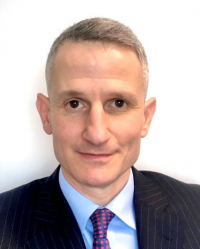
Dr Konstantinos Loumidis


Every professional displayed on Counselling Directory has been independently verified by our team to ensure they have suitable credentials to practise.
This professional is available for new clients.
This professional is available for new clients.
About me
Dr K. LOUMIDIS BSc MA PhD ClinPsyD CPsychol AFBPsS MAEW
Consultant Clinical Psychologist • Chartered Psychologist (BPsS) • Registered Psychologist (HCPC) • Cognitive Behavioural Therapist • Independent Expert Witness
CONSULTING ROOMS
• London & South England: 10 Harley Street, London (medico-legal reports only) W1G 9PF
• Leicestershire & Rutland: The Leicester Nuffield Hospital LE5 1HY
• West Midlands, The Wolverhampton Nuffield Hospital WV6 8LE
• North West: Spire Manchester Hospital M20 2AF
• Shropshire: The Shropshire Nuffield Hospital SY3 9DP
• Worcestershire: South Bank BUPA Hospital, Worcester WR5 3YB
• Other venues: Consultations in other venues can also be arranged
ABOUT ME
I have successfully treated many thousands of patients, I have provided over a thousand reports as an expert witness, and I have trained hundreds of professionals. I qualified in 1996 after ten years of University and NHS clinical training in England. Formerly a Lecturer in Clinical Psychology, and till 2005 an NHS Consultant Clinical Psychologist, I now work full-time in clinical and medicolegal private practice.
EXPERTISE
• Over 20 years of clinical experience and 30 years of academic knowledge.
• Qualified in 1996, after 10 years of University and NHS clinical training in England.
• Former Lecturer in Clinical Psychology and NHS Consultant Clinical Psychologist.
• Currently in full-time clinical and medico-legal practice.
PSYCHOLOGICAL THERAPIES
• Specialising in scientifically based and clinically tested psychological therapies.
• Trained in specialist cognitive and behavioural therapies (CBT).
• Researched and published in the field of cognitive and behavioural therapy.
• Expert in tailoring treatments to complex individual and clinical problems.
• Successfully assessed and treated over a thousand patients.
EXPERT WITNESS
• Expert witness in personal injury, clinical negligence, and employment law.
• Specialist in psychological rehabilitation after injury or trauma.
• Expert in diagnostic clinical interviewing and psychometric testing.
TEACHING & RESEARCH
• Supervised and trained hundreds of postgraduate and NHS professionals.
• Designed and supervised doctoral level clinical training and research.
• Authored a number of publications in peer-reviewed journals and books.
Training, qualifications & experience
ACADEMIC QUALIFICATIONS
Dr Loumidis was educated in the UK and was awarded the following degrees:
* Doctor of Clinical Psychology, University of Manchester (Clin.Psy.D.)
* Doctor of Philosophy in Psychology, Keele University (Ph.D.)
* Master of Arts in Community Care, Keele University (M.A.)
* Bachelor of Science in Psychology, University College London (B.Sc., Hons.)
PROFESSIONAL TITLES
Dr Loumidis has the following professional titles:
* Chartered Psychologist by the British Psychological Society (C.Psychol.)
* Member of the Division of Clinical Psychology of the British Psychological Society (C.Psychol.)
* Registered Psychologist with the Health and Care Professions Council (H.C.P.C.)
* Associate Fellow of the British Psychological Society (A.F.B.Ps.S.)
PROFESSIONAL MEMBERSHIP
Dr Loumidis is registered with the following professional bodies:
* The Health and Care Professions Council (H.C.P.C.)
* The British Psychological Society (B.Ps.S.)
* The Division of Clinical Psychology of the British Psychological Society (D.C.P.- B.Ps.S.)
* The Association of Child Psychologists on Private Practice (A.Ch.P.P.P)
REGISTRATION AS AN EXPERT WITNESS
Dr Loumidis is registered with the following expert witnesses' organisations:
* The British Psychological Society Directory of Expert Witnesses
* The Academy of Expert Witnesses (AEW)
* The Association of Personal Injury Lawyers' (APIL) Directory of Expert Witnesses
* The UK Register of Expert Witnesses
* The Society of Expert Witnesses (SEW)
EXPERIENCE
After his academic and professional clinical training, Dr Loumidis started practicing as a Chartered Clinical Psychologist at North Manchester General Hospital (1996-1997). He then worked as a Specialist Clinical Psychologist with the Thameside Eating Disorder Service at Basildon Hospital, whilst holding an Honorary Lectureship at University College London (1997-1998). He then took up a Lectureship in Clinical Psychology at the University of Leicester, whilst practicing as a Highly Specialist Clinical Psychologist in Psychological Trauma at the Leicester General Hospital (1998-2001). Dr Loumidis then worked as a Consultant Clinical Psychologist at Kidderminster Hospital (2001-2005) in both primary and secondary care mental health services, whilst at the same time he was Honorary Member of Staff at the University of Birmingham, and Clinical Head of the Wyre Forest Primary Care Counselling Service. In 2005, he moved on from part-time to full-time private practice. Dr Loumidis is the founder and Director of Expert Psychologists Ltd.
Member organisations
Being registered/accredited with a professional body means an individual must have achieved a substantial level of training and experience approved by their member organisation.

The HCPC are an independent, UK-wide health regulator. They set standards of professional training, performance and conduct for 16 professions.
They keep a register of health professionals who meet their standards, and they take action if registered health professionals fall below those standards. They were created by a piece of legislation called the Health Professions Order 2001.
Registration means that a health professional meets national standards for their professional training, performance and conduct.
Areas of counselling I deal with
Other areas of counselling I deal with
PSYCHOLOGICAL THERAPIES:
Treatment plans are tailored to the persons unique problem formulation. Examples of therapies include:
* Anxiety management
* Assertiveness training
* Behavioural therapy
* Cognitive behavioural therapies (CBT)
* Bereavement counselling
* Counselling
* Family therapy and interventions
* Exposure
* Individually tailored therapies
* Interpersonal therapy
* Motivational interviewing
* Problem solving therapy
* Psychosexual counselling
* Rational emotive behaviour therapy (REBT)
* Schema therapy
* Stress management
* Supportive psychotherapy
* Systemic therapy
AREAS OF EXPERTISE:
This list is not exhaustive. Sometimes people's problems are more complex, do not fall into neat categories or are unclear. Dr Loumidis is more than happy to discuss these matters with you.
CLINICAL PROBLEMS
* Addictions
* Anger
* Anxiety
* Behavioural problems
* Body image problems
* Compulsive acts
* Depression
* Eating disorders
* Jealousy
* Obsessive-compulsive disorders (OCD)
* Pain
* Panic disorder & agoraphobia
* Personality disorders
* Phobias
* Psychosomatic problems
* Severe mental health problems
* Sexual problems (male and female)
* Sleep problems and nightmares
* Social functioning
* Stress reactions (including PTSD)
* Unexplained physical problems
ADJUSTING AND COPING
* Bereavement and grief
* Chronic illness and disabilities
* Disfigurement
* Physical disabilities & injury
* Coping with terminal illness
WORKPLACE
* Bullying and harassment
* Burn-out
* Coping with redundancy
* Discrimination
* Managing conflict
* Occupational stress
EXPERT WITNESS SERVICES
* Personal injury
* Effects of medical negligence
* Effects of chronic illness
* Effects of pain and disability
* Occupational stress
PSYCHOLOGICAL TRAUMA
* Accidents and personal injury
* Assaults
* Abuse (current and past)
* Disaster and trauma
* Industrial accidents
* Medical negligence
* Post-traumatic stress disorder
* Rape and sexual assaults
* Road Traffic Accidents (RTA)
* Sexual abuse
* Victims of crime
* War veterans
HEALTH PROBLEMS
* General health problems
* Chronic Fatigue Syndrome (CFS/ME)
* Irritable Bowel Syndrome (IBS)
* Preparation for surgery
LIFE DIFFICULTIES
* Self confidence and self esteem
* Managing stress
* Adolescent problems
* Gender and sexuality issues
* Lifestyle problems
* Marital problems and divorce
* Relationship problems
* Weight management
* Changing unwanted behaviours
* Tiredness and fatigue
For more information please visit Dr Loumidis website at www.ExpertPsychologists.co.uk
Therapies offered
Fees
Additional information
FEES
Private psychological therapy can be available to self-paying individuals, and people who have their fees paid by private medical insurers or other sources.
PAYING YOURSELF
Although some people have private medical insurance, a lot of people pay themselves to see Dr Loumidis. You will be informed about the cost of treatment before you start, so you can pay Dr Loumidis directly at the end of every session.
PRIVATE MEDICAL INSURANCE MEMBERS
If you have medical insurance, please contact your insurer to check that your cover is adequate, that your condition is covered, and whether there is an excess or a maximum limit on the amount you can claim. Dr Loumidis is a recognised provider of clinical psychology services by a number of medical insurance companies, but some insurers may require that you are referred by your GP or a Consultant Psychiatrist before you can start psychological therapy. Sometimes people have a limited number of sessions for which they are covered, and they then make up the difference by paying themselves for their treatment.
When I work
| Mon | Tue | Wed | Thu | Fri | Sat | Sun | |
|---|---|---|---|---|---|---|---|
| Morning | |||||||
| Afternoon | |||||||
| Evening | |||||||
| Night |
Please call Dr Loumidis's secretary on 07738 559 114, who may be able to offer an appointment within days or weeks.
Further information
TYPES OF PSYCHOLOGICAL THERAPIES
Dr Loumidis has helped many hundreds of people to overcome their problems. He skilfully and sensitively offers empirically based psychological therapies of scientifically proven efficacy, such as cognitive behavioural therapy, individually tailored to personal needs and circumstances.
Range of Therapy
The choice of psychological treatment (or therapy) depends on your individual needs and preferences and Dr Loumidis will discuss this matter with you. Individually tailored therapies combining elements from various therapies are also available for certain types of problems. Dr Loumidis offers a wide range of scientifically based and clinically tested psychological treatments (or therapies). Every person is treated as an individual and your idiosyncratic problem formulation will form the basis of your individual treatment plan. Dr Loumidis will periodically evaluate how well you are progressing, by using a range of outcome measures and psychometric tests and discuss your progress with you.
Cognitive Behaviour Therapy (CBT)
Cognitive Behavioural Therapy (CBT) is the most researched psychotherapy, which has been proved to be effective in the treatment of several disorders (Department of Health, 2001). Behavioural and Cognitive Psychotherapies are psychological approaches which are based on scientific principles and which research has shown to be effective for a wide range of problems. CBT helps people identify and understand problems in terms of the relationship between thoughts, feelings and behaviour. The approach usually focuses on difficulties in the here and now, and relies on you and Dr Loumidis developing a shared view of your problems. This then leads to the identification of personalised, time-limited therapy goals and strategies, which are continually monitored and evaluated. More information is available from the British Association for Behavioural and Cognitive Psychotherapies (BABCP).
Counselling
Counselling is a systematic process which gives individuals an opportunity to explore, discover and clarify ways of living more resourcefully, with a greater sense of well being. Counselling may be concerned with addressing and resolving specific problems, making decisions, coping with crises, working through conflict, or improving relationships with others.
Bereavement Counselling
When someone close to us dies or is in the process of dying, people may have trouble coping with the intense feelings of grief, or may feel a strong sense of isolation or confusion. Some people find it helpful to talk about these feelings with someone from outside their family or friends. Bereavement counselling focuses on helping people and relatives understand their grief and to adjust to life after loss. It can also help people to understand other people around them who may be expressing their grief in different ways.
Behavioural Therapy
Behavioural therapy is based on the principle that many of our actions are the result of things that we have learned in the past or more recently. The focus of behavioural interventions is on definable behaviours that can be readily monitored and addressed in therapeutic interventions. It is a very directive therapy which sets objectives (in collaboration with you) for you to attain. Dr Loumidis will offer you homework assignments to help you understand your difficulties and achieve your goals. It is particularly good for treating phobias, obsessional and compulsive behaviour and can also be helpful in dealing with some sexual problems. Anxiety management and exposure therapy are particular types of behavioural therapy.
Anxiety Management
This approach involves a varying mixture of behavioural strategies. The strategies commonly include education about the nature of anxiety (e.g. fight-or-flight response), recognising hyperventilation, the slow-breathing technique, relaxation training and graded exposure. Stress management, assertiveness training and structured problem-solving may also be included, depending on your needs.
Graded Exposure
People who avoid particular places or people because of anxiety (i.e. those suffering from phobias, obsessive-compulsive disorder or panic) are encouraged gradually to face the things they fear, starting with easy situations and building up slowly to harder things. Breathing and relaxation techniques are used to help you remain in the feared situation until the anxiety diminishes and you can learn that you can cope with the situation. Dr Loumidis will prepare you and provide you with support but will not always need to accompany you in your assignments.
Compliance Therapy
This is a form of counselling, usually used for people with severe mental illness who are reluctant to take medication. It encourages you to take an active role in monitoring your illness and negotiating treatment decisions. Your views about medication are elicited, ambivalence explored and options considered in an atmosphere of support and empathy, avoiding blaming. This interactive approach has proved more successful than a simple didactic approach.
Family Interventions (for people with schizophrenia)
A form of 'psycho-social intervention', this comprises giving information to you and your family about the illness, and helping them to improve their ability and confidence in tackling problems effectively. The approach is broadly behavioural and the family is encouraged to set realistic goals. This means that the family is able to avoid making unrealistic demands on you and to make the environment of the person who is ill less stressful. Relapse rates are reduced.
Interpersonal Therapy
Interpersonal psychotherapy uses the connection between the onset of symptoms and current interpersonal problems as a treatment focus. It deals with current, rather than past, relationships, and maintains a clear focus on your social context and dysfunction rather than your personality.
Problem Solving Therapy
Structured problem solving can help you sort out and deal with stresses that contribute to worry and depression. It involves encouraging you to identify specific problems, to order them in terms of importance and then to focus on one problem at a time, writing down potential solutions and identifying specific steps that they might take to implement the solutions. A main aim is to assist you to incorporate the principles of efficient problem solving and goal achievement into your everyday lives. The aim is not for Dr Loumidis to solve your problems for you, but to give you skills so that you can effectively overcome problems and achieve goals for yourself. Self-management is a key goal, with Dr Loumidis adopting the role of teacher or guide.
Motivational Interviewing
This is a directive, client-centred counselling style for eliciting behaviour change by helping clients to explore and resolve ambivalence. Compared with nondirective counselling, it is more focused and goal-directed. The examination and resolution of ambivalence is its central purpose, and Dr Loumidis will be intentionally directive in pursuing this goal. It can be helpful for people with alcohol problems, drug addictions, gambling problems, and also a wider range of problems where people are resistant or ambivalent about changing.
Supportive Psychotherapy
Some people have ongoing difficulties in their lives which cannot be resolved, who become disorganized when confronted with stressful situations, or may have a personality style which makes it very difficult for them to benefit from other treatments. Dr Loumidis will offer a safe and trustworthy forum in which you discuss the troubling aspects of your lives and act as a strong guide/authority figure, outlining things that the you should do and not do. This type of therapy is not exploratory and doesn't delve into the past histories.
Schema Therapy
Schema therapy is an innovative psychotherapy for personality disorders, chronic depression, and other difficult individual and couples problems. Schema therapy integrates elements of cognitive therapy, behaviour therapy, object relations, and gestalt therapy into one unified, systematic approach to treatment.
Rational Emotive Behaviour Therapy (REBT)
REBT (formerly known as RET) is a form of Cognitive Behavioural Therapy. REBT is an action- and results-oriented psychotherapy which teaches individuals how to identify their own self-defeating thoughts, beliefs and actions and replace them with more effective, life-enhancing ones.
Psychosexual Counselling
This is a specialist form of counselling which can offer help for range of problems such as general sexual problems (such as difficulty reaching orgasm, pain during intercourse, problems controlling ejaculation or in reaching orgasm) sexual health concerns, sexual phobias and paraphilias, gender dysphoria and sexual orientation difficulties.
Systemic Therapy
Systemic and family therapy aims to identify and explore patterns of belief and behaviour in roles and relationships. The therapist actively intervenes to enable people to decide where change would be desirable and to facilitate the process of establishing new, more fulfilling and useful patterns. Therapy is often relatively short term.
Individually Tailored Therapies
Often people's difficulties need to be understood and formulated using more than one theoretical framework and Dr Loumidis may choose a mix of techniques from more than one therapy approach. The resulting therapy is pragmatic, tailored to the individual.