
About me
I am a person-centred and trauma and autism-informed therapist. This means that our work together is built on a foundation of safety, trust, and deep respect for your unique experience. I don’t see you as a set of symptoms or a label. Instead, I see you as a whole person, with your own strengths, history, and way of making sense of the world. My role is not to tell you what to do, but to walk alongside you as we explore what has happened, how it has shaped you, and what you need to move forward.
Being trauma-informed means I understand how overwhelming experiences—whether recent or in the distant past—can affect your nervous system, your thoughts, your relationships, and your sense of self. I work carefully and sensitively, ensuring that you always feel in control of the process. We won’t rush into anything you’re not ready to explore, and I will never push you beyond your capacity. Instead, I help you build the resources and resilience you need to process difficult emotions at a pace that feels safe for you.
Being autism-informed means I understand that autistic people may experience the world, relationships, and therapy itself in ways that are unique to them. I am attentive to sensory sensitivities, communication differences, and the importance of predictability and clarity. I adapt my approach to honour your needs—whether that means adjusting the pace, being more explicit about the process, or creating a space where you feel safe to be fully yourself, without masking or explaining yourself away.
How Person-Centred therapy helps you:
Provides a warm, non-judgemental relationship where you feel truly heard and accepted
Helps you reconnect with your own inner wisdom and ability to heal
Allows you to explore your experiences without pressure or expectation
Supports you in making choices that feel right for you, not anyone else
Builds trust in yourself as you navigate loss, change, and uncertainty
How Trauma-Informed therapy helps you:
Creates a safe, predictable environment where you feel grounded and in control.
Helps you understand how your body and mind have responded to difficult experiences
Supports you in regulating overwhelming emotions and reducing anxiety
Respects your boundaries and ensures you never feel re-traumatised
Empowers you to reclaim your sense of safety, agency, and self-worth
I also draw on psychodynamic therapy to help us understand how earlier experiences may be influencing your present life. Together, we can explore patterns that may have developed as a way of coping, and gently work towards freeing you from cycles that no longer serve you. My approach allows us to address both the immediate pain you’re carrying and the deeper roots of what you’re experiencing.
I work with those experiencing:
Anxiety, low mood, and the emotional impact of trauma.
Grief and loss in all its forms.
Bereavement, miscarriage, stillbirth, and abortion.
Relationship breakdown, affairs, betrayal, and divorce.
Domestic abuse and coercive control.
Childhood sexual abuse.
Serious illness, cancer, and disability.
Life transitions and identity issues.
I work with adults and older adults, including trainee therapists, and offer face-to-face, online, and telephone sessions. I provide both short-term and long-term therapy, depending on what feels right for you. I am a registered member of the BACP and hold qualifications in Counselling and Psychology, along with specialist training as a Certified Grief Educator.
My approach is warm and calm, using Person-Centred and Psychodynamic therapy to help you understand your experiences, process difficult emotions, and move towards the life you want to rebuild.
Qualifications:
BSc (Hons) Counselling.
Foundation Degree (Level 5) in Counselling.
BSc (Hons) Psychology.
Certified Grief Educator.
Trauma-Informed Therapist.
Autism-Informed Therapist.
Registered Member of the British Association for Counselling and Psychotherapy (BACP).
If any of this resonates with you, I'd be pleased to welcome you for a 15-minute introductory call.
Training, qualifications & experience
I possess a first-class BA (Hons) in Counselling and a Bachelor of Science (Hons) in Psychology from Middlesex University. Additionally, I have completed a Level 5 Foundation Degree in Counselling from Middlesex University, which is accredited by the British Association for Counselling and Psychotherapy (BACP). Furthermore, I have attained a Level 3 Certificate in Counselling Studies from the Counselling and Psychotherapy Central Awarding Body (CPCAB) and a Level 2 Certificate in Counselling Studies, also from CPCAB.
In terms of my work experience, I am actively involved as a volunteer at Samaritans and work as a therapist for Barnet Bereavement Services and Pegasus—Men’s Wellbeing Centre. Previously, I worked as a therapist at Phoenix Counselling and Psychotherapy Services.
Member organisations

BACP is one of the UK’s leading professional bodies for counselling and psychotherapy with around 60,000 members. The Association has several different categories of membership, including Student Member, Individual Member, Registered Member MBACP, Registered Accredited Member MBACP (Accred) and Senior Registered Accredited Member MBACP (Snr Acccred). Registered and accredited members are listed on the BACP Register, which shows that they have demonstrated BACP’s recommended standards for training, proficiency and ethical practice. The BACP Register was the first register of psychological therapists to be accredited by the Professional Standards Authority (PSA). Accredited and senior accredited membership are voluntary categories for members who choose to undertake a rigorous application and assessment process to demonstrate additional standards around practice, training and supervision. Individual members will have completed an appropriate counselling or psychotherapy course and started to practise, but they won’t appear on the BACP Register until they've demonstrated that they meet the standards for registration. Student members are still in the process of completing their training. All members are bound by the BACP Ethical Framework and a Professional Conduct Procedure.
Accredited register membership

The Accredited Register Scheme was set up in 2013 by the Department of Health (DoH) as a way to recognise organisations that hold voluntary registers which meet certain standards. These standards are set by the Professional Standards Authority (PSA).
This therapist has indicated that they belong to an Accredited Register.
Areas of counselling I deal with
Other areas of counselling I deal with
I am a certified Grief Educator
A Certified Grief Educator is committed to providing the highest level of grief support through education, experience, and insights into the often unacknowledged rocky terrain of grief.
As a Certified Grief Educators I have completed a certificate program designed by world-renowned grief expert, David Kessler. I bring his unique methodology, tools, and decades of experience to help people navigate the challenges of grief.
Therapies offered
Photos & videos



Fees
£80.00 per session
Concessions offered for
Additional information
I have several open slots available for concessions
When I work
| Mon | Tue | Wed | Thu | Fri | Sat | Sun | |
|---|---|---|---|---|---|---|---|
| Early morning | |||||||
| Morning | |||||||
| Early afternoon | |||||||
| Late afternoon | |||||||
| Evening |
Further information
Availability:
I am available for sessions on Tuesdays, Wednesdays, Thursdays, Fridays and Weekends. These sessions can be conducted in person, remotely via video, or over the telephone.
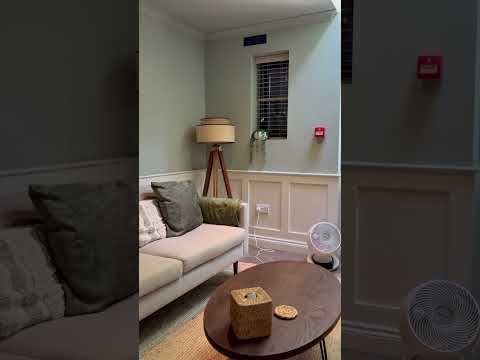
My Face-to-Face practice is located in Enfield and is wheelchair accessible.
My first session:
Our first session can be arranged in a way that suits you best-whether it's by telephone, email, or text. We will agree on a mutually convenient time, daytime or evening, to ensure your comfort and convenience.
Online: I will email you a Zoom link before the session and invite you to our meeting.
Telephone: I will call you at the start time of the session we agreed on.
Face to Face: When you arrive at the venue, ring the bell, and you will be given access to the reception area.
What I can help with:
Abuse, Anxiety, Bereavement, Depression, Disability, Loss, Men's issues, Redundancy, Relationships, Stress, Work related issues
Types of therapy:
Person-centred
Clients I work with:
Adults, Older adults, Trainees
How I deliver therapy:
Long-term sessions, Long-term face-to-face work, Online therapy, Short-term sessions, Short-term face-to-face work, Telephone therapy, Time-limited