When words are not enough: how clay therapy can help

There are moments in therapy when words are not enough. Not because someone is unwilling to talk, avoiding difficult experiences or lacking insight, but because some experiences can be difficult to organise into language.
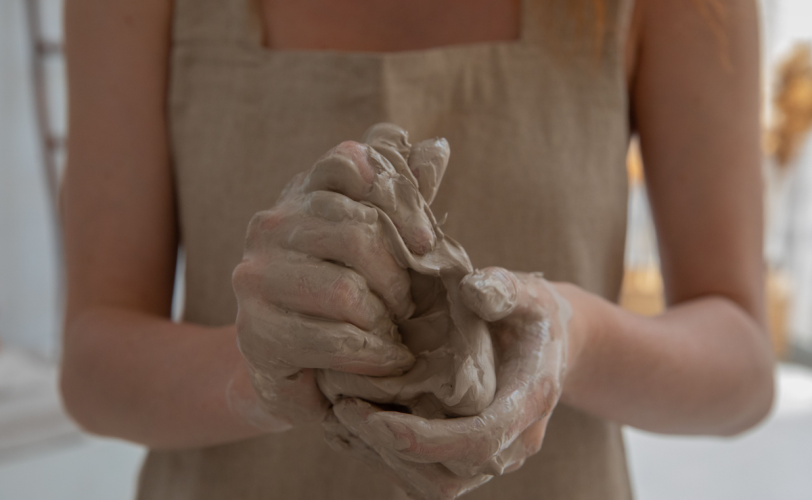
They may instead be felt through the body: in breathing, muscle tension, movement, withdrawal, restlessness, pressure, touch or the need to hold on.
This is one of the ideas at the heart of Clay Field Therapy®: a body-based therapeutic approach in which clay, water, touch and movement provide another way of exploring experience.
Rather than beginning with a story or an explanation, the work begins with contact. A wooden box filled with clay. A bowl of warm water. The hands. There is no artwork that has to be made, no requirement to be creative and no particular way of using the clay correctly. The person is invited to notice what happens as their hands begin to explore.
What is clay field therapy?
Clay field therapy is a sensorimotor approach that uses a flat box of clay as the central therapeutic medium.
Unlike some forms of art therapy, the focus is not primarily on creating an image or object. Instead, attention is given to the physical experience of touching and working with the clay.
The hands may press, smooth, dig, gather, push, pull, scrape or rest. Water can be introduced, changing the texture and resistance of the clay. Through this process, the person receives continual sensory feedback from the material.
Clay is particularly suited to this kind of work because it both responds and resists. It can be soft and yielding, but it also pushes back against pressure. It can be changed, repaired, flattened, gathered and reshaped. This provides the hands and body with something tangible to respond to.
The body often responds before words arrive
Emotional experience does not always begin with conscious thought.
Before someone says, “I feel anxious”, their breathing may already have changed. Before they recognise feeling overwhelmed, their muscles may have tightened. Before a child can explain that they need reassurance, their body may already be searching for something firm, repetitive or containing.
Children in particular often communicate through movement, play, sensory exploration and action before they are able to describe their internal experience clearly. Young people may also find direct conversation difficult or exposing, particularly when they are unsure how to describe what they are experiencing.
Adults can experience something similar. A person may understand their history very well intellectually, yet still experience anxiety, tension, shutdown or emotional overwhelm in ways that feel difficult to shift through understanding alone.
Clay therapy can provide another way into those experiences. Instead of immediately asking, “Why do you feel this way?”, the therapeutic process may begin by noticing what the body and hands are already doing.
Why touch and movement matter
Touch provides the nervous system with a large amount of information.
When the hands press into clay, they encounter resistance. When they release pressure, the sensation changes. When water is added, the texture alters again. The person is therefore not only thinking about their experience; they are physically interacting with something.
Within a therapeutic relationship, these experiences can support awareness of sensation, pressure, rhythm, boundary and movement.
For example, someone may notice that:
- they repeatedly push strongly into the clay
- they avoid touching certain areas
- they prefer slow or repetitive movements
- they are drawn towards adding water
- they want to gather the clay together
- they need something firm to push against
- their breathing changes as their movements change
None of these responses needs to be interpreted as having a fixed meaning. What matters is what the person experiences while doing them.
The idea of a self-found hold
One phenomenon that can emerge in clay work is what may be described as a self-found hold. Rather than being instructed to create a particular shape, the person's hands may begin to organise the clay in a way that feels supportive. They might gather the clay together, create a firm edge, form a hollow, place one hand against another or find somewhere for their hands to rest.
From the outside, the movement may appear very simple. Internally, however, the experience may feel significant. Breathing might slow. Muscle tension may reduce. The person may become quieter or feel more settled. There may be a sense of having found something firm enough to lean into or contain an experience that previously felt difficult to manage.
The important part is not the shape that has been created. It is the person's embodied experience of finding support through their own actions. Rather than only talking about feeling held or supported, the hands may discover an experience of holding directly.
Who might clay therapy be suitable for?
Clay field therapy can be used with children, young people and adults.
It may be particularly interesting for people who:
- find it difficult to put emotions into words
- become overwhelmed or emotionally shut down
- experience anxiety or persistent physical tension
- have experienced significant stress, disruption or loss
- find traditional talking approaches difficult or tiring
- feel disconnected from their body or emotions
- benefit from sensory or movement-based ways of exploring experience
- have developed considerable insight but still feel that something has not shifted
The approach does not necessarily replace talking therapy. Words can remain an important part of reflection and integration. However, clay work can allow therapeutic exploration to begin somewhere different. Sometimes the physical experience comes first, and words follow later. Sometimes very few words are needed during the process itself.
What happens during a typical clay field therapy session?
A clay field therapy session usually takes place with the person seated or standing in front of a shallow wooden box containing clay. Warm water and simple tools such as sponges may also be available. The therapist will usually introduce the clay field and explain that there is no expectation to create anything or use the clay in a particular way.
The person may then begin exploring the surface of the clay with their hands. Some people start immediately. Others may hesitate, touch the clay cautiously or spend time noticing how it feels before making larger movements.
During the session, the therapist pays attention to the person's experience rather than interpreting what is being made. They may notice changes in breathing, movement, pressure, rhythm or posture and help the person remain aware of what they are experiencing. The therapist's role is also to provide safety and containment so that the person does not have to navigate the experience alone.
A session might involve pressing firmly into the clay, smoothing the surface, digging, making boundaries, adding water, gathering material together or simply resting the hands. There is no predetermined sequence. The work develops from what happens between the person, the material and the therapeutic relationship.
Clay therapy with children and young people
Children naturally understand the world through their bodies. Before language becomes sophisticated, experience is organised through touch, movement, rhythm, sensation and relationship.
This means a child may communicate something important through action long before they can explain it verbally. At the clay field, there is less pressure to answer questions or find the right words. The child can explore through their hands while the therapist provides a calm and attentive presence.
Repetitive movements, pushing, smoothing, gathering, making boundaries or using water may all become part of the child's way of experimenting with regulation, control, connection and sensory experience.
The focus remains on what the child experiences rather than on interpreting their creation. For some children and young people, this can make therapy feel more accessible than beginning with direct conversation.
Clay therapy with adults
Adults often come to therapy with considerable insight. They may know where certain feelings come from and understand the relationships or experiences that have shaped them.
Yet understanding does not always change how the body responds. Someone may know that they are safe while still experiencing tension. They may understand why they become overwhelmed while still struggling to regulate that response. They may have spoken extensively about an experience and still feel that something remains unresolved physically.
Body-based approaches such as clay therapy can complement this insight by providing an experience rather than another explanation. A person may discover strength through pushing. Boundary through resistance. Softness through water. Steadiness through holding. Release through clearing or reshaping. The meaning of these experiences remains individual.
Does the therapist interpret the clay?
A common misconception is that a therapist will look at what someone has created and explain what it represents. That is not the central focus of clay field therapy. The therapist is more interested in the person's immediate experience.
What does it feel like to press there? What happens when the clay resists? What changes when more pressure is used? What happens in the body when the hands slow down? What feels supportive? What feels like too much?
Rather than assigning meaning from the outside, the therapist helps the person notice their own responses. This keeps the therapeutic process rooted in the person's experience rather than in an interpretation imposed upon them.
When experience comes before insight
Therapy is sometimes imagined as a process in which understanding creates change. Often it does, but change can also happen in the opposite direction. An experience can happen first, and understanding may develop afterwards.
A person presses into the clay and discovers strength. They gather it and experience containment. They soften it with water and find that something in their own body softens too. They encounter resistance and realise that they can stay with it.
These can appear to be small moments, yet they may provide the nervous system with a different experience from the one it has come to expect. For people who have spent a long time trying to think their way through emotional difficulty, that can feel significant.
Clay therapy offers another way of listening. Not instead of language, but alongside it. Sometimes words lead the way, and sometimes the hands find somewhere to begin first.

Find the right counsellor or therapist for you
All therapists are verified professionals