About me
Feel calmer in your body — without needing to talk
Clay Field Therapy® is a body-based therapeutic approach for adults, young people and children experiencing anxiety, overwhelm, stress, trauma, grief, emotional difficulties, or a sense of feeling stuck.
It can be particularly helpful when you understand what is happening intellectually, but still find yourself carrying tension, distress or disconnection in everyday life.
If talking therapy has not fully helped, this offers another place to begin.
I am Simon Riley, a psychotherapist and Clay Field Therapy® practitioner with experience supporting children, young people and adults through trauma, bereavement, emotional overwhelm and significant life transitions. My approach is grounded in person-centred values and informed by many years of therapeutic work, including within specialist bereavement services.
Using touch, clay and sensory experience, sessions offer a different way to explore what is happening — without needing to find the right words first.
No art skills.
No experience.
No pressure to explain.
This approach may suit you if you:
- Feel stuck in constant thinking or mental noise
- Become easily overwhelmed or on edge
- Find it difficult to switch off or settle
- Feel disconnected from your body or emotions
- Notice strong bodily reactions that are difficult to understand
- Have found that talking therapy has not fully reached what you are experiencing
A body-based approach using touch, not art
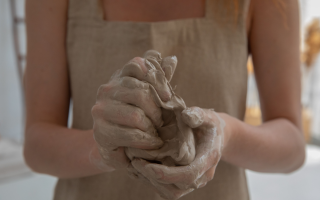
You work at a Clay Field: a flat wooden box containing smooth clay, alongside warm water.
Using your hands, you can explore texture, pressure, movement and contact at your own pace. There is no requirement to make anything or explain what you are doing.
The work is less focused on analysing experience and more concerned with what becomes noticeable through touch, movement and bodily experience. Sessions are paced around comfort, consent and choice.
Talking is available where it is helpful, but it does not have to lead the process.
How sessions work
Sessions are individual, calm and structured around your needs.
Clay Field Therapy® can be adapted for adults, adolescents and children, taking account of age, developmental needs and individual circumstances.
It is usually offered as short-term, stabilisation-focused therapeutic work, although the number of sessions varies according to the individual.
I currently offer in-person Clay Field Therapy® in the Midlands.
I also offer experiential introductory Clay Field Therapy® workshops in different UK locations for therapists, helping professionals and others interested in experiencing the approach.
If you are curious about whether Clay Field Therapy® might be suitable for you, you are welcome to get in touch to arrange an initial consultation or ask any questions.
Training, qualifications & experience
I am a qualified counsellor, play therapist and Clay Field Therapy® practitioner with extensive experience supporting children, young people and adults through anxiety, trauma, grief, bereavement, neurodivergence and emotional overwhelm.
My work is grounded in person-centred counselling, play therapy, embodied therapeutic practice and Clay Field Therapy®. I have particular experience in specialist bereavement services and supporting people where talking alone has not fully helped.
I work in an ethical, structured and reflective way, with clear boundaries and careful attention to pacing, suitability and emotional safety.
Ongoing supervision and professional development support safe, effective and accountable practice.
Member organisations

BACP is one of the UK’s leading professional bodies for counselling and psychotherapy with around 60,000 members. The Association has several different categories of membership, including Student Member, Individual Member, Registered Member MBACP, Registered Accredited Member MBACP (Accred) and Senior Registered Accredited Member MBACP (Snr Acccred). Registered and accredited members are listed on the BACP Register, which shows that they have demonstrated BACP’s recommended standards for training, proficiency and ethical practice. The BACP Register was the first register of psychological therapists to be accredited by the Professional Standards Authority (PSA). Accredited and senior accredited membership are voluntary categories for members who choose to undertake a rigorous application and assessment process to demonstrate additional standards around practice, training and supervision. Individual members will have completed an appropriate counselling or psychotherapy course and started to practise, but they won’t appear on the BACP Register until they've demonstrated that they meet the standards for registration. Student members are still in the process of completing their training. All members are bound by the BACP Ethical Framework and a Professional Conduct Procedure.
Accredited register membership

The Accredited Register Scheme was set up in 2013 by the Department of Health (DoH) as a way to recognise organisations that hold voluntary registers which meet certain standards. These standards are set by the Professional Standards Authority (PSA).
This therapist has indicated that they belong to an Accredited Register.
Areas of counselling I deal with
Other areas of counselling I deal with
Emotional overwhelm; nervous system regulation; grounding and stabilisation; developmental trauma; sensory and embodied approaches; feeling disconnected from self; regulation through touch.
Photos & videos


Fees
£65.00 - £85.00
Concessions offered for
Additional information
Initial consultation session (90 mins): £65
A chance to explore whether this approach feels right for you, ask questions, and begin gentle stabilisation-focused work.
Therapeutic sessions (75–90 mins): £85
Sessions last 75–90 minutes to allow enough time for regulation work and sensory processing without rushing the process.
Clay Field Therapy® is usually offered as short-term, stabilisation-focused work, although the number of sessions varies according to individual needs.
3-session block — £240
When I work
| Mon | Tue | Wed | Thu | Fri | Sat | Sun | |
|---|---|---|---|---|---|---|---|
| Early morning | |||||||
| Morning | |||||||
| Early afternoon | |||||||
| Late afternoon | |||||||
| Evening |
Further information
Important information
Clay Field Therapy® is offered as a gentle, structured and supportive approach that works through touch, sensory experience and reflection.
Sessions are tailored to the individual and paced according to your needs. An initial consultation provides an opportunity to discuss what brings you here, answer any questions you may have, and explore whether this approach is likely to be helpful for you.
If I feel another form of support may be more appropriate, I will discuss this with you and help you consider the available options.