What is remote nature-based therapy?

For some, the standard image of counselling – sitting face-to-face in a quiet, indoor room – can feel restrictive. There can be a specific physical tension that arises in that setting; a tightening in the chest or a sense of being ‘under the microscope’ that can make it difficult to speak freely.
While the traditional office is designed for privacy, the forced stillness and constant eye contact can sometimes act as a barrier to the very process it is meant to facilitate.
This is why many practitioners move the work outdoors. In its traditional form, nature-based therapy involves moving the therapeutic work into a park, woodland, or coastal path. The therapist and client walk or sit side-by-side, utilising the natural environment as a backdrop for their conversation.
However, a newer iteration has emerged that adapts this for our digital age: remote nature-based therapy.
The practicalities of remote sessions
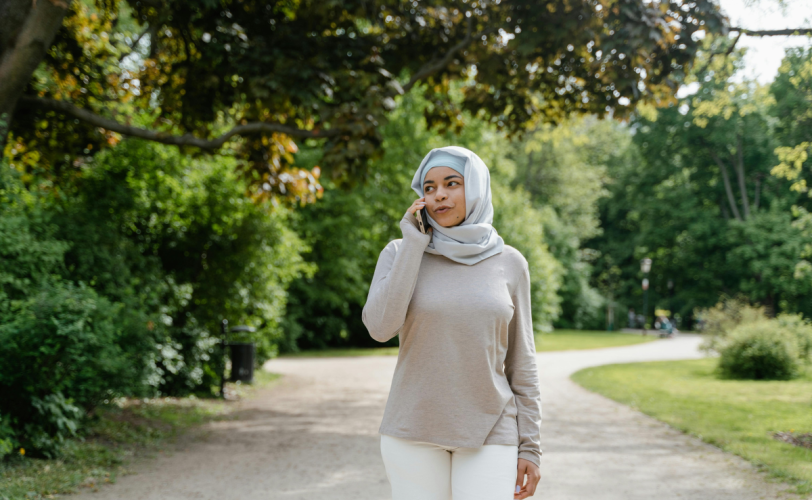
Remote nature therapy operates on the same principles as in-person outdoor work but uses technology to bridge the distance. For example, the session may begin with a brief video check-in from our respective locations. This allows for a face-to-face greeting and a quick safety check to ensure both are in a comfortable, private-enough space.
Once the session starts properly, the video might be turned off, and the rest of the hour will be conducted via a phone call. Both the client and the therapist walk in their own separate, local environments while connected through headphones. This ensures that the focus remains on the internal experience and the surroundings rather than a screen. It opens up the possibility of this way of working to anyone, regardless of where they happen to be located.
The benefits of an outdoor context
Moving therapy into the open air offers several clinical and personal advantages that are difficult to replicate in an office:
Parallel processing
Walking side-by-side (metaphorically) removes the pressure of sustained eye contact. For many, it is easier to symbolise difficult experiences when they are looking at a horizon or the path ahead rather than a person's face.
Physical grounding
Emotional distress often feels like a static, internal seizing. Movement provides a visceral anchor. The physical act of walking helps to move that energy through the body, preventing the feeling of being trapped in one’s own thoughts.
A natural mirror
The outdoors provides a constant stream of metaphors. The changing seasons, the growth of a tree, or even the way the weather shifts can provide a helpful way to talk about our own internal changes.
Agency and safety
The client remains in a space where they feel a sense of ownership. This can lower the entry barrier for those who find the clinical atmosphere of an office intimidating, overly formal, or simply too static.
Who can benefit from remote nature-based therapy?
The remote nature-based model can provide specific advantages over both the traditional office and in-person outdoor work, beyond simply questions of convenience.
While this approach can support many people, below are some examples of those who may find it particularly beneficial:
People with ADHD or who are neurodivergent
For those who struggle with masking, being in their own chosen local environment while on a call removes the sensory stress of an unfamiliar office. The freedom to fidget, pace, or look at the horizon while connected via audio allows for deeper processing without the pressure of constant eye contact.
Men
For some men perhaps less accustomed to the intensity of emotional expression that counselling can bring, using the remote audio model shifts the dynamic to a shared journey. Walking in their own location while talking creates a sense of agency and privacy that often leads to more honest, vulnerable disclosure.
People with anxiety or agoraphobia
For those whose world has shrunk due to anxiety, the remote element provides a bridge. Starting where it feels safe to do so, the audio connection acts as a portable safe space, allowing re-engagement with outdoor spaces while having professional support right in your ear.
People living with depression
When a video call feels like a monumental effort, the simplicity of a phone call and a walk can lower the barrier to entry for some. This remote movement acts as a visceral anchor, helping to prevent the internal seizing that may happen when trying to discuss heavy emotions while sitting still at a desk.
Practicality over perfection
It is important to be clear that this is not a cure-all, a quick-fix or a way to bypass the hard work that counselling requires. It is not inherently superior to indoor work; it is simply a different way to engage with the therapeutic process. Whether the work happens in an office or on a phone in a forest, the clinical framework remains the priority. Nature acts as the environment, but the professional relationship is what provides the support.
There is a tendency in the wellness industry to suggest that nature provides an easy absolution for our struggles. The reality is more grounded. You can spend an hour walking through a wood, discussing the various tangles of your life and the internal logic of your choices, and still finish the session feeling unresolved.
Remote nature-based therapy doesn't offer a neat solution to the complexities of being human. Life remains a messy, often inconsistent experience. However, by removing the four walls of the consulting room and moving into a more expansive space, we may find it slightly easier to acknowledge those complexities. The progress isn't necessarily in ‘fixing’ the problem, but in the willingness to stop hiding the struggle and to simply walk with it for a while.

Find the right counsellor or therapist for you
All therapists are verified professionals