What do boys need from us?

A while ago, a parent said something to me that has stayed with me: "I don't know what's happened to him. He is still the son I know and love, but it feels like he's disappearing."
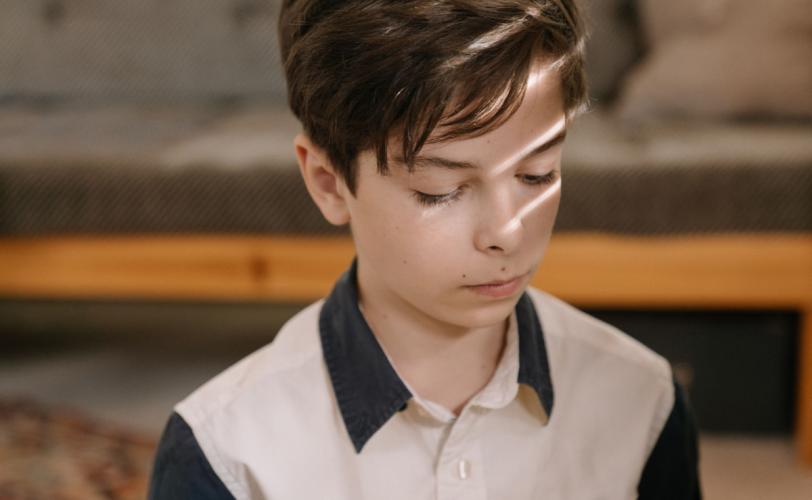
She wasn't describing a boy getting into trouble at school. She wasn't talking about aggression, defiance, or bad behaviour. She was talking about a boy who had become quieter over time. A boy who seemed less interested in spending time with friends. Less interested in trying new things. Less engaged with the world around him.
This is not the first time. I've heard similar concerns from other parents in the past. Often, parents are not worried about what their sons are doing. They're worried about what they've stopped doing.
A boy who used to spend time with friends now rarely leaves his room. A boy who once seemed confident now second-guesses himself constantly. A boy who appears fine on the surface but seems increasingly disconnected from the things that once mattered to him.
Sometimes that withdrawal happens so gradually that nobody notices until it's been going on for months or even years. It raises an uncomfortable question: What is happening to our boys?
This isn't about claiming that boys have it harder than girls. Every young person faces their own pressures and challenges, and those deserve to be taken seriously. Nor is it about pointing fingers at schools, parents, technology, or society as a whole. Life is rarely that simple.
However, I do think it's worth asking whether some boys are struggling in ways we don't always recognise. The statistics give us reason to pause. Boys continue to fall behind girls academically in several areas of education, while men account for around three-quarters of suicides in the UK. Statistics never tell the whole story, but they can point us towards conversations that matter.
As a counsellor, I often find myself thinking that the biggest concern isn't always what boys are expressing. It's what they're keeping to themselves.
The boys we don't notice
When we think about boys who are struggling, our attention naturally goes towards the ones making the most noise. The boy who's been excluded from school. The boy who's constantly getting into trouble. The boy whose behaviour makes adults concerned.
Those boys absolutely need support. But the boys I'm often most concerned about are the ones who quietly disappear into the background. They're not causing disruption. They're not drawing attention to themselves. In fact, many adults would describe them as "fine". Yet beneath the surface, something is changing.
Confidence slowly erodes. Motivation fades. The future begins to feel less exciting. Over time, they start asking less from life because they've stopped believing life has much to offer them. The challenge is that emotional pain is often quiet. As adults, we're naturally drawn towards what is loud and visible. But some of the deepest struggles happen in silence.
Boys feel more than we sometimes realise
One of the biggest misconceptions about boys is that they don't want to talk about feelings. I'm not convinced that's true. What I see more often is boys expressing emotions differently.
A teenage boy might spend twenty minutes talking about football before mentioning that he feels lonely. He might tell you everything about the gym while quietly battling anxiety. He might repeatedly say he's angry when, underneath that anger, he's feeling rejected, ashamed, frightened, or hurt. The feelings are there. They're often just packaged differently.
Many boys communicate side by side rather than face to face. They open up during a walk, while driving, playing sport, fixing something, playing games or working towards a shared task.
I've often wondered whether we sometimes mistake a different style of emotional expression for a lack of emotional depth. Because when boys feel safe enough to talk, it's rarely the case that there's nothing going on underneath. More often, nobody has learned how to listen to the way they're speaking.
The search for direction
One thing I hear repeatedly from young men is uncertainty. Not simply about careers. About who they are.
Questions such as:
- "What does being a good man actually mean?"
- "Where do I fit?"
- "What am I supposed to do with my life?"
These aren't new questions. Every generation has wrestled with them. But many boys today are trying to answer them in a culture that sends mixed messages about masculinity, success, relationships, identity, and purpose.
Previous generations often had a clearer path into adulthood. Those expectations weren't always healthy or fair, but they did provide direction. Today there is more freedom. That's a positive thing, but freedom can also create uncertainty.
When there is no obvious path, some boys struggle to find their footing. Purpose doesn't automatically appear simply because options exist. Sometimes having endless possibilities can feel just as overwhelming as having none.
Why positive male role models matter
Whenever this topic comes up, people can become defensive. Let's be clear. This isn't about suggesting mothers aren't enough. Many mothers do a remarkable job raising boys, often while carrying enormous responsibility themselves. But boys often benefit from seeing positive masculinity modelled in everyday life.
That role model could be a father, grandfather, uncle, teacher, coach, youth worker, employer, or family friend. What matters isn't the title. It's the example. Boys are constantly observing.
How does this man deal with failure? How does he react when things don't go his way? How does he treat people? How does he handle responsibility? How does he show strength without becoming aggressive? Young people learn far more from what they see than what they're told.
A positive role model doesn't need to be perfect. They simply need to demonstrate that it's possible to be strong and kind, confident and humble, capable and compassionate.
Looking for answers online
Every generation of boys has searched for guidance. The difference today is where that search often takes place. For many boys, mentors have been replaced by algorithms. When a young person feels confused, isolated, or uncertain, the internet is often the first place they turn.
Sometimes they find positivity. Sometimes they find community. Sometimes they find inspiration. But not always. The online world is full of people offering certainty to those who feel lost. Simple answers are incredibly attractive when life feels complicated.
That's why I don't think the solution is to criticise boys for looking online. The search itself isn't the problem. The real question is whether healthy alternatives exist offline. Do boys have trusted adults they can turn to? Do they feel they belong somewhere? Do they have opportunities to contribute, learn, develop, and grow? If those needs aren't being met, we shouldn't be surprised when they search elsewhere.
Confidence isn't built through praise alone
Something else I've noticed is that confidence rarely grows from being told you're amazing. Real confidence tends to emerge through experience and then positive reinforcement.
It develops when someone attempts something challenging and discovers they're capable of more than they first believed. That might be through sport. Learning a skill. Finding a job. Building something. Helping others. Taking responsibility. Making mistakes and recovering from them.
Many boys seem to flourish when they're trusted with meaningful responsibility. Not because life should be hard, but because achievement feels different when it has been earned. Responsibility gives people a reason to step forward. It creates purpose. It creates ownership. It creates belief, and belief is often the foundation of confidence.
What boys might need most
Every boy is different, and there is no single solution. But certain themes appear again and again when boys begin to thrive.
They benefit from adults who believe in them. From clear boundaries rather than endless criticism. From challenge alongside support. From strong friendships. From opportunities to contribute. From physical activity. From responsibility. From a sense of belonging.
Most importantly, they benefit from knowing they matter. Not because of what they achieve. Not because of their grades. Not because they're successful. But because they have value as human beings.
A different question
Perhaps we're asking the wrong question. Instead of asking: "What's wrong with boys?" Maybe we should be asking: "What do boys need from us?"
Because boys aren't broken. They're trying to find their place in the world, just as every generation before them has done. The difference is that many are navigating that journey in a world that feels increasingly disconnected, uncertain, and complex.
Maybe what they need isn't more criticism. Maybe they need guidance, purpose and responsibility. Maybe they need adults willing to look beyond the behaviour, the silence, or the withdrawal and ask what might be happening underneath.
Because when boys feel understood, supported, challenged, and valued, remarkable things can happen. They become more confident. More resilient. More compassionate. More connected.
And perhaps that is the real question we should be asking ourselves: Are we giving boys what they need to become the men they are capable of being?

Find the right counsellor or therapist for you
All therapists are verified professionals