The trauma behind low self-confidence

This article explores why confidence is not something you lack, and how person centred therapy can help you reclaim it.
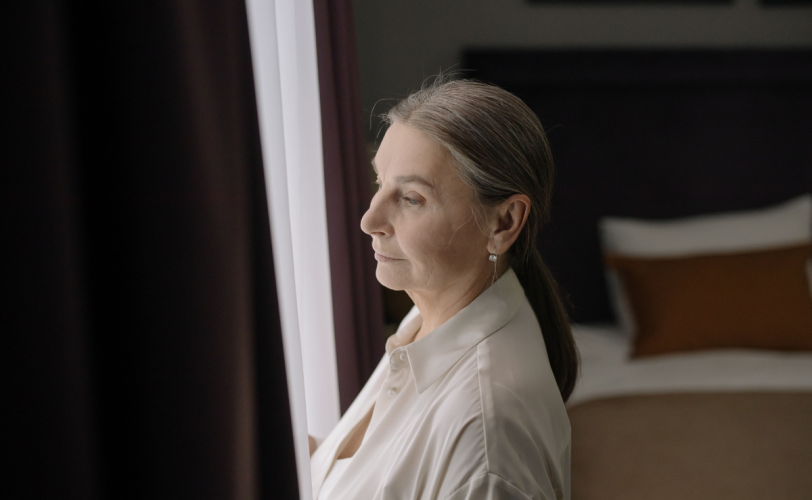
Low self-confidence is often spoken about as though it were something lacking, something a person missed and merely needed to work on to build, like a muscle. We are told to "fake it till we make it", to adopt power poses, to think positively. And for some everyday situations, such strategies have their place.
But for many people, low self-confidence runs far deeper than technique can ever reach. It is not a skill they never acquired. It is the lasting imprint of trauma, of experiences, often in childhood, that taught them at the deepest level that they were not safe, not capable, or not enough. This article explores that connection and offers a more compassionate and effective path forward.
Confidence is built or broken in relationship
Genuine self-confidence is not bravado. It is the quiet, embodied sense that you are fundamentally capable, that you can meet life's challenges, and that you have the right to take up space. This kind of confidence is not taught through instructions. It is built, in early life, through relationship, through repeated experiences of being supported, encouraged and allowed to try, fail and try again within a secure base (Bowlby, 1988).
When those early experiences are present, a child internalises a confident template: "I can do hard things, and even if I struggle, I am still worthy." When they are absent or disrupted, or when a child is repeatedly criticised, humiliated, compared unfavourably to others, or made to feel that mistakes are dangerous, a very different template forms: "I am not capable. I must not get it wrong. I am not enough."
Low self-confidence is rarely something you were born with. It is far more often something that happened to you by your external environment, and what happened can be understood, grieved and, in time, transformed.
How trauma shapes the confident self
The word trauma often conjures images of catastrophic events. But as the trauma researcher Dr Bessel van der Kolk explains, trauma is defined not by the magnitude of the event but by its impact on the person, particularly on the nervous system and the sense of self (van der Kolk, 2014). For a child, experiences that an adult might consider minor can be genuinely traumatic: persistent harsh criticism, the unpredictability of an unstable home, the humiliation of being shamed, the chronic absence of encouragement.
These experiences shape the developing brain. The amygdala, the threat detection system, becomes sensitised, primed to anticipate failure, rejection or danger (LeDoux, 2015). The stress response system is more easily triggered. And the internal narrative that forms, such as "I will probably fail ", "people will judge me ", "I am not as good as others", becomes not a passing thought but a deeply grooved neural pathway, reinforced through years of repetition.
This is why advice to "just be confident" so often fails. You cannot simply instruct a sensitised nervous system to feel safe, any more than you can talk yourself out of a startle response. The low confidence is not a thought to be corrected. It is a trauma response to be understood and, gently, healed.
The person-centred path to reclaiming confidence
Person-centred therapy approaches low self-confidence not as a deficit to be filled, but as a wound to be healed within a safe relationship. Carl Rogers proposed that human beings possess an innate actualising tendency, a drive toward growth, competence and the full realisation of their potential, which remains intact even when buried beneath years of trauma (Rogers, 1961). Confidence, in this view, is not something to be installed from outside. It is something already within you, waiting for the conditions in which it can safely emerge.
Those conditions, Rogers identified, are empathy, congruence and unconditional positive regard (Rogers, 1957). For someone whose confidence was broken by criticism and conditional approval, the consistent experience of being accepted exactly as they are, including in their struggles, their fears and their perceived failures, directly contradicts the trauma that shaped them. Slowly, the nervous system learns a new lesson: "I am acceptable even when I am imperfect. I am safe even when I am vulnerable."
Research confirms that experiences of relational safety support the regulation of the threat response system and the gradual formation of new, healthier patterns (Schore, 2012). The brain that learned it was not enough can, through repeated experiences of acceptance, learn something new because the brain remains capable of change throughout life.
In my clinical practice, I work through a framework I call the Three As: Awareness of the experiences that shaped your relationship with yourself; Acceptance of the feelings and self-beliefs that resulted, without further self-criticism; and Authentic Communication of the self that the trauma caused you to hide. The aim is not to construct a confident persona, but to help you reclaim the genuine, capable self that was always there beneath the wound.
If you recognise yourself in this article and would like to explore the roots of your confidence in a space of genuine acceptance, working with a therapist can help and support you.
References
Bowlby, J. (1988). A secure base: Parent–child attachment and healthy human development. London: Routledge.
LeDoux, J. (2015). Anxious: Using the brain to understand and treat fear and anxiety. New York: Viking.
Rogers, C.R. (1957). 'The necessary and sufficient conditions of therapeutic personality change', Journal of Consulting Psychology, 21(2), pp. 95–103.
Rogers, C.R. (1961). On becoming a person: A therapist's view of psychotherapy. London: Constable.
Schore, A.N. (2012). The science of the art of psychotherapy. New York: W.W. Norton & Company.
van der Kolk, B. (2014). The body keeps the score: Brain, mind, and body in the healing of trauma. New York: Viking.

Find the right counsellor or therapist for you
All therapists are verified professionals