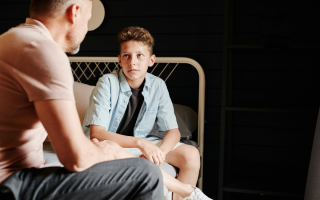
Parental alienation: the impact on men and how therapy can help

Parental alienation is a term used to describe a situation in which a child becomes estranged from one parent, often following separation or divorce, and where this breakdown in the relationship is influenced by the behaviour or dynamics involving the other parent.

It can involve a range of experiences, from subtle shifts in communication and contact to more entrenched patterns where a child resists or refuses a relationship with one parent.
This is a complex and sensitive area and needs to be handled with care. Not all cases of child–parent estrangement are the result of alienation, and each family situation requires careful, individual understanding.
It is also important to acknowledge that the term parental alienation remains professionally and legally contested in some contexts, particularly in cases involving allegations of domestic abuse, coercive control, or safeguarding concerns. Critics have raised concerns that the concept can, in some situations, be misapplied or used in ways that risk minimising genuine experiences of abuse or protective parenting responses. For this reason, situations involving family breakdown and child contact require careful, evidence-based, and ethically informed assessment.
This article refers specifically to situations where a parent experiences significant and unjustified disruption or breakdown in the parent–child relationship, rather than cases where estrangement may relate to safety or welfare concerns.
However, when a parent experiences a significant and prolonged loss of contact with their child, the emotional and psychological impact can still be profound.
In my clinical practice, I've noticed this issue is often raised by fathers. While parental alienation can affect any parent, fathers may be more likely to experience reduced contact following separation. This can place them at increased risk of emotional isolation, especially when combined with social expectations around masculinity and coping.
This article explores the psychological impact of parental alienation on men, including its association with distress, withdrawal, shame, and identity disruption. It also considers the broader social and legal context and outlines how therapy can support individuals in navigating this complex and often painful experience.
The psychological impact of parental alienation
Research into high-conflict separation, loss of child contact, and prolonged parental alienation indicates an association with increased psychological distress, including depression, anxiety, and suicidal thoughts. Parental alienation is not itself a direct cause of suicide, but the combination of chronic emotional pain, uncertainty, isolation, and lack of resolution can increase vulnerability, particularly where other risk factors are present.
In my clinical experience, the greatest concern is often not an overt crisis, but a gradual emotional withdrawal. Men may begin to disengage emotionally and socially, feeling increasingly disconnected from support systems and uncertain about whether things can improve. Some describe feeling emotionally exhausted or make statements such as, “I feel like giving up.”
It is important to place this within a broader context. In the UK, men account for around three-quarters of suicide deaths, and relationship breakdown is recognised as a significant contributing risk factor (Office for National Statistics, 2024). Research consistently shows that relationship breakdown and loss of contact with children are associated with poorer mental health outcomes in men, with separated and divorced men at substantially higher risk of suicidal thoughts and behaviour compared to those who are married (Barrass, 2023; Barry and Liddon, 2020; AIBM, 2025). When parental alienation forms part of this experience, the cumulative emotional burden can become particularly profound.
In the UK, children are significantly more likely to live primarily with their mother following separation, with only a small proportion living mainly with their father. While many arrangements are agreed outside of court, available data indicate that around 90% of children in single-parent households reside with their mother, compared to a much smaller proportion with their father (Office for National Statistics, 2024). This imbalance can mean that fathers are more likely to experience reduced day-to-day contact with their children, particularly in contested cases.
There has also been growing discussion within parliamentary and policy contexts regarding the mental health impact of parent-child separation following family breakdown. Some discussions have suggested that if mothers experienced prolonged separation from their children at comparable rates to fathers in contested cases, there would likely be greater public recognition of the emotional and psychological impact. The purpose of these observations is not to compare suffering between men and women, but to highlight the seriousness of prolonged separation from a child for any parent.
The lack of legal recognition and emotional impact
One of the additional challenges many fathers describe is the sense that their experience is not always fully recognised within formal systems.
While family courts consider the welfare of the child as the primary concern, some parents report feeling that the emotional harm associated with prolonged separation or alienating dynamics can be difficult to evidence, difficult to name, and difficult to have acknowledged consistently.
At the same time, family court professionals and safeguarding organisations have also raised concerns about the potential misuse of parental alienation allegations within cases involving domestic abuse or coercive control. This highlights the importance of ensuring that all claims are approached carefully and assessed within the wider context of family dynamics, safeguarding, and the lived experiences of both parents and children.
For some individuals, the lack of clarity or consistency surrounding these issues can contribute to:
- feelings of invisibility or not being heard
- frustration with the legal process
- a sense of power imbalance
- reduced trust in systems intended to support families
When individuals feel that their experiences are not fully acknowledged, both emotionally and structurally, it can deepen distress and reinforce feelings of helplessness.
Why it can be difficult for men to speak about it
Many men I work with do not initially talk about parental alienation directly. Often, it emerges gradually in therapy once trust and emotional safety have developed.
There are several reasons why this can be difficult to discuss:
- fear of being judged or misunderstood as a parent
- concern about how emotions may be interpreted in legal contexts
- concern that disclosures may be dismissed or viewed through adversarial narratives
- a belief that they should “cope” rather than struggle
- difficulty finding language for the emotional impact
- hope that the situation may improve without intervention
- a feeling that no one will believe them
- concern that speaking openly could worsen the conflict or affect child contact
There is often also a strong sense of responsibility, where men continue trying to remain emotionally stable for others while privately struggling themselves.
Shame and emotional burden
Shame is often a central emotional experience in these situations. Fathers may internalise the breakdown in the relationship as a personal failure, even when the circumstances involve complex dynamics beyond their control.
This can lead to thoughts such as:
- “I have lost my child.”
- “I must have done something wrong.”
- “I am not a good father.”
Over time, these beliefs can become deeply embedded and begin shaping how individuals view themselves across all areas of life, not just parenting.
In therapy, an important part of the work is helping clients separate responsibility from self-blame and explore the difference between influence, control, and interpretation.
Cognitive and emotional effects
Parental alienation can affect both emotional well-being and cognitive functioning.
Common experiences include:
- ongoing rumination and replaying events
- difficulty concentrating or remaining present
- sleep disruption and intrusive thoughts
- heightened emotional sensitivity
- hopelessness and emotional exhaustion
- all-or-nothing thinking about outcomes or systems
These patterns can reinforce emotional distress, creating a cycle that becomes increasingly difficult to interrupt without support.
How therapy can help
Therapy is not about forcing acceptance or minimising the reality of the situation. Rather, it offers a safe and steady space where the emotional impact can be explored and processed without judgement.
For men experiencing parental alienation, therapy may involve:
Making sense of what has happened
Helping clients understand their experiences in a way that reduces confusion and self-blame.
Processing grief and ambiguous loss
Creating space for sadness, anger, and emotional pain that may have been suppressed for long periods of time.
Reducing emotional isolation
Offering a consistent and non-judgemental environment where difficult experiences can be spoken about openly.
Supporting emotional regulation
Helping clients manage overwhelming emotions that may have become intensified over time.
Rebuilding identity and self-worth
Supporting individuals to reconnect with aspects of identity beyond the crisis, including personal values, relationships, and future goals.
Developing coping strategies for daily life
Providing practical tools for managing anxiety, sleep difficulties, intrusive thoughts, and emotional overwhelm.
Exploring ways to maintain a connection with children
Using reflective and solution-focused approaches to help individuals consider safe and constructive ways of maintaining connection where possible.
Moving forward without denying the pain
One of the most important aspects of therapeutic work in this area is that it does not require denying reality or rushing towards forced acceptance. Instead, therapy can help individuals find ways to live alongside uncertainty, grief, and emotional complexity in a manner that feels more manageable and less overwhelming.
For some fathers, relationships with their children may improve over time. For others, contact may remain limited or inconsistent. Therapy supports individuals in emotionally preparing for both possibilities while reducing the sense of being consumed by waiting, conflict, or hopelessness.
Parental alienation is a deeply painful and complex experience that can have a significant psychological impact on both the parent involved and the children affected. It can affect identity, emotional well-being, relationships, and mental health, particularly when combined with isolation and lack of support.
It can also be made more difficult by the fact that these experiences are not always consistently recognised within legal or systemic frameworks, while at the same time remaining subject to ongoing professional and safeguarding debate. This complexity can leave some individuals feeling unseen at a time when they most need understanding and support.
Therapy offers a space where these experiences can be acknowledged with care, compassion, and emotional safety. While it cannot always change external circumstances, it can help reduce emotional isolation, rebuild a sense of identity and stability, and support individuals in finding a way forward that feels more humane and psychologically sustainable.
Individuals affected by parental alienation or prolonged parent–child separation may also find additional information and peer support through Parental Alienation UK.
References
Australian Institute of Male Health and Studies (AIBM) (2025) Separation leads to suicide among men: lessons for practitioners. Available at: AIBM article (Accessed: 1 May 2026).
Barrass, E. (2023) When love breaks down: relationship breakdown and suicide risk in men. Available at: National Elf Service article (Accessed: 1 May 2026).
Barry, J.A. and Liddon, L. (2020) Child contact problems and family court issues are related to chronic mental health problems for men following family breakdown. Psychreg Journal of Psychology, 4(3), pp. 57–66. Available at: Psychreg Journal PDF (Accessed: 1 May 2026).
Office for National Statistics (2024) Families and households in the UK: 2023. Available at: ONS families and households report (Accessed: 1 May 2026).
Office for National Statistics (2024). Suicides in England and Wales: 2023 registrations. Available at: ONS suicide statistics report (Accessed: 1 May 2026).

Find the right counsellor or therapist for you
All therapists are verified professionals