Understanding emotionally based school avoidance (EBSA)

I have lived experience of supporting a child with Emotionally Based School Avoidance (EBSA), and I am also a therapist with many years of professional experience. Yet negotiating the education system has left me deeply puzzled, both as a parent and as a professional.
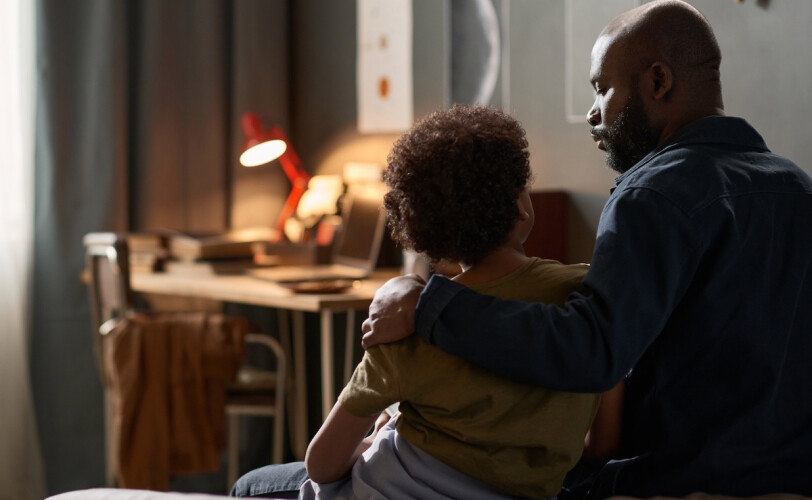
I believe EBSA remains widely misunderstood by many, and that children and parents affected by it can often experience judgement. The following article is based on my lived experience, therapeutic knowledge, and instinct as a mum.
What is EBSA?
Let me start with what it is not. It is not defiance. It is not the result of poor parenting. It is not a choice made by a child who "can't be bothered". Nor is it a disengagement from education.
EBSA is an anxiety-based response to feelings of overwhelm associated with the school environment. The emotional, mental and physical demands of school may exceed the child's current capacity to cope. School is neurologically demanding, and some children experience significant emotional distress linked to particular aspects of that environment.
EBSA can be triggered by many different child-specific factors, including academic overwhelm, social pressure, bullying, unmet needs, or a combination of school-based and home-based experiences. It can present in a myriad of ways, but common signs include avoiding or prolonging getting dressed in the morning, refusal to leave the bedroom or house, physical symptoms of anxiety, emotional distress, and ultimately feeling unable to attend school at all.
A specific diagnosis is not required for a child to receive support for EBSA. Underlying Special Educational Needs (SEN) may contribute to the development of EBSA, while the resulting anxiety and emotional distress could themselves become significant barriers to learning and school attendance.
How schools can support children with EBSA
EBSA does not usually begin with complete school refusal. Both parents and schools, therefore, need to be vigilant in noticing subtle changes in a child's behaviour and presentation. The longer EBSA remains unaddressed, the more entrenched the anxiety can become.
When these changes are overlooked, opportunities for early intervention are missed. This can result in a damaging cycle of attendance, overwhelm, emotional collapse, increasing absence and escalating anxiety. If the system will not bend, the child often breaks.
Schools and families need to develop a collaborative approach, with the child at the centre of any plan. Interventions need to be early, consistent and emotionally safe. Our education system can be so heavily focused on attendance and measurable outcomes that it places considerable pressure on schools to meet targets. Unfortunately, this can lead to policies and practices that are not always compatible with supporting a child experiencing EBSA.
In our case, support for my daughter was inconsistent, and there was no coordinated plan. With the benefit of hindsight, I can clearly see the pattern that developed. She would begin each term with determination. Because she was attending, the school assumed support was no longer required. By half term, mornings were becoming increasingly difficult. I requested flexibility around arrival times, but this proved difficult to agree on. By the second half of the term, she was exhausted and heavily masking her distress. Burnout followed, leading eventually to complete non-attendance.
Many young people experiencing school-related trauma are living, or have lived, in a state of fight, flight or freeze, with nervous systems constantly alert to potential threat. Children cannot learn effectively when they remain in a prolonged state of hypervigilance. They first need support to regulate and calm their internal systems. Only then can meaningful connection occur, and only then can reasoning and learning begin.
Emotional impact of EBSA on families
Any family familiar with EBSA will be able to relate to the morning battle, and far more often than not, each family member will start their day in an adrenaline-fuelled state.
I have heard siblings of those with additional needs referred to as 'ghost children', who are unintentionally sidelined by the overwhelming and immediate needs of another. In some cases, parents and/or carers may face judgement from family, friends, society, and school. Family relationships can be put under pressure in many ways; for example, financial strain (due to missed work), strained communication, and exhaustion can set in.
If we imagine the family system as a baby's mobile, as soon as one part moves, all the other parts are jostled to find their balance again. And so it is in a family: if one member is struggling to find their place, everyone else has to adjust their position too.
Practical steps you can take
Commencing and continuing what feels like a battle with the education system is exhausting. Every child's situation is different, so the most appropriate support will depend on their individual needs and circumstances. The suggestions below are intended as general guidance.
Here are a few examples of practical steps you can take:
- secure the right point of contact at school - this is an essential foundation
- establish a communication system that works for you and for the school
- document everything and ask for regular reviews
- continually move the focus away from attendance, towards a plan that creates safety
As parents, you do have options. You might choose to continue with school and try to establish a manageable way for your child to attend that is sanctioned by the school. You can make a referral for a Section 19 assessment if your child has missed more than 15 days of school; the council must consider alternative provision.
If your child has an EHCP, you can request a formal EOTAS (Education Other Than At School) package or consider asking for a move to a specialist provision, or you might consider deregistering your child and choosing to home-educate or enrol them in an online school if this is appropriate.
How can therapy help?
EBSA impacts the entire family system, and therapy can be a very valuable source of support.
Therapy can support the child experiencing EBSA, other family members who may be feeling displaced, parents and/or carers or the entire family system. There are many types of therapy, and finding the right help largely depends on the individual(s) needing support.
Therapy can provide a safe, non-judgemental space for children and young people to explore the thoughts, feelings and experiences that may be contributing to their anxiety. Depending on the individual, approaches such as person-centred counselling, cognitive behavioural therapy (CBT), play and creative therapies, family therapy, and animal-assisted therapy may all have a role. The most important factor is finding an approach that feels safe, supportive and suited to the child's individual needs.
Therapy can also be invaluable for parents and siblings, offering space to process the emotional impact of EBSA, strengthen family relationships and develop practical strategies for navigating what can often feel like an overwhelming journey.
If we truly want children to learn, we must first create the conditions in which they feel safe enough to do so. Until then, we risk measuring attendance while overlooking distress. Behind every child struggling with EBSA is a family carrying that burden, often silently. By supporting the whole family with compassion, flexibility and appropriate therapeutic intervention, we give children the best possible chance not only to return to learning, but to thrive.

Find the right counsellor or therapist for you
All therapists are verified professionals