Supporting children's stress responses in mocks and GCSE exams

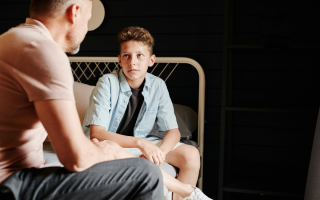
My son arrives home from school anxious, his shoulders heavy with the weight of mock exams approaching this month, a pivotal rehearsal before next year’s GCSEs. Normally, he thrives on studying; he loves the rhythm of learning, the satisfaction of progress. However, now, under the pressure of looming deadlines, he has slipped into freeze mode.

Instead of opening his books, he turns to computer games. The screen becomes a safe place, a way to escape the pressure of revision and exams. It is not that he does not care; rather, his nervous system has hit pause. The games give him structure, predictability and a sense of control when exams feel overwhelming.
The window of tolerance
In counselling, we often talk about the window of tolerance, the emotional zone where a person can manage stress, stay engaged and think clearly. Within this window, revision feels possible, even enjoyable. Yet, when anxiety rises too high, the body may tip into fight, flight or freeze. For my son, the freeze response looks like staring at his books without moving forward or retreating into gaming. It is not laziness; it is the nervous system signalling overload.
The racing car metaphor
After exploring the window of tolerance together, he recognised he was in freeze mode. Helping him make sense of it, I introduced the image of a car race: the pressure of the track, the roar of expectations, the sudden overwhelm that can cause the system to struggle. It gave shape to his experience, not as failure, but as a natural response to stress when the road feels too fast, too loud, too much.
Together, we reimagined the race. The petrol stations became revision sessions, vital pauses to refuel and keep the engine running. The pit crew: parents, teachers and friends, checking tyres, topping up fuel, offering steady reminders that he is not alone on the track. And the finish line? The exams: not just an end, but a moment of arrival, of effort crystallised into completion and the thrill of having made it through.
When the pressure is too much, the car stalls. Freeze mode is like sitting in the driver’s seat with the engine running but unable to move forward. Computer games are like pulling into a side lane, safe for a while, but they are not the main track.
Supporting a child in freeze mode
As parents, we can help by normalising the 'freeze' and explaining that it is a natural stress response, not a failure. Encouraging pit stops, short breaks, snacks or sensory resets can restart the engine:
- Balancing gaming time: Recognising that games can be a coping tool, while gently guiding back to revision.
- Breaking tasks down: Instead of the whole race, focus on the next lap, one subject, one page and one question.
- Staying present: Sometimes the pit crew’s job is simply to stand nearby, offering calm reassurance.
- Collaborating with the school: Access arrangements, quiet space or flexible revision plans can widen the window of tolerance.
Mock exams and GSCEs are not just a test of knowledge, they are a test of resilience. For autistic young people, in particular, anxiety can narrow the window of tolerance much quickly, pushing them into freeze mode. Computer games may offer temporary relief, but with the pit crew, the car can refuel, reset and return to the track.
Supporting parents through exam season
Counselling offers a compassionate space for parents to explore the emotional impact of their child’s GCSE anxiety, not just on the family system, but on their own emotional regulation. When a child’s distress moves a parent outside their window of tolerance, it can trigger feelings of helplessness, irritability, or emotional shutdown. In therapy, we name these responses not as failures, but as signs of care under strain.
Psychoeducation helps parents understand the nervous system’s stress responses, while therapeutic tools, like grounding techniques, boundary-setting and co-regulation strategies, support them in reclaiming calm. Together, we explore how to hold both empathy and containment, so parents can offer steadiness without losing themselves. This shared work fosters resilience, not just in the child, but in the parent’s own capacity to navigate challenge with compassion.
Recognising the parent’s window of tolerance
When stress narrows that window, parents may find themselves:
- snapping, becoming irritable or over-controlling (fight)
- withdrawing emotionally (freeze)
- avoiding, excessive screen time or burying oneself in work (flight)
Normalising the impact
These are not signs of failure but signs of overwhelm. It is important to name this: parenting through exam stress is hard. When your child is anxious, it is easy to absorb their distress, to feel responsible or to fear what might happen if they “don’t do well.” These reactions are deeply human, and they reflect love, not inadequacy.
Supporting regulation: CBT tools for parents
During counselling sessions, mindfulness and Cognitive Behavioural Therapy (CBT) can offer practical ways to widen your window of tolerance and return to calm:
Grounding techniques
Use your senses to anchor in the present. Try the 5-4-3-2-1 technique: name 5 things you can see, 4 you can touch, 3 you can hear, 2 you can smell and 1 you can taste.
The butterfly hug
Cross your arms gently over your chest, fingertips resting just below your collarbones, like folded wings. Let your hands rest on the tops of your shoulders. Begin to tap your shoulders alternately, left then right, in a slow, steady rhythm, like the soft flutter of butterfly wings.
As you tap, breathe deeply: inhale through your nose for four counts, exhale through your mouth for six. With each tap, imagine sending calm through your body, like a quiet, reassuring pat that says, “Well done. You’re doing your best.”
Breathing practices
Slow, deep breaths signal safety to the nervous system. Try box breathing: inhale for 4, hold for 4, exhale for 4, hold for 4.
Thought reframing
Notice anxious thoughts like “If they fail, it’s my fault” and gently challenge them. Ask: Is this thought helpful? Is it true? What would I say to a friend in this situation?
Behavioural activation
When anxiety leads to withdrawal, gently re-engage with small, meaningful actions: a walk, a chat with a friend or a creative activity.
Supporting a child through GSCEs is not just about revision timetables; it is about emotional regulation for the whole family. When parents feel supported, they can model calm, create safety and remind their child that exams are just one race, not the whole journey.

Find the right counsellor or therapist for you
All therapists are verified professionals