Movie therapy and mental health: Scenes that heal

Movies are more than just entertainment. They are portals. They allow us to witness grief, fear, shame, rage, love and liberation often before we have the words to name those feelings in ourselves. That’s why I use movie therapy, a term I use to describe my practice of using carefully chosen film or series scenes to help clients visualise, connect with and make sense of their psychological experiences.
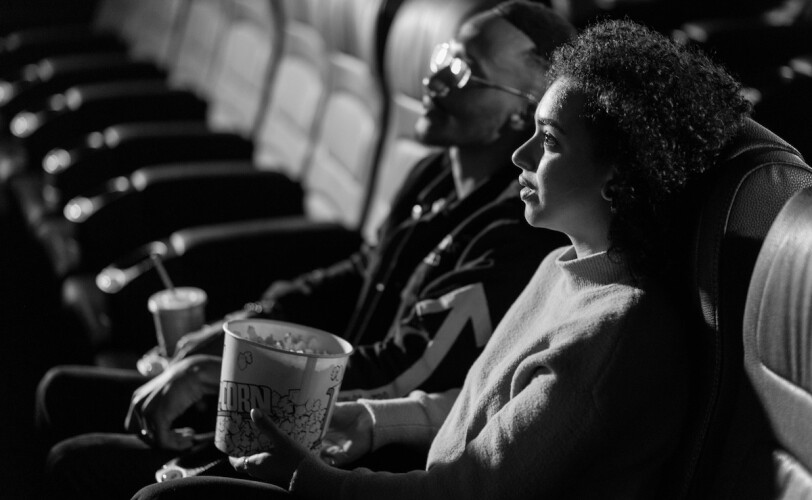
Cinematic narratives, particularly those depicting psychological struggle and triumph, can serve as potent tools in therapeutic contexts, offering vicarious experiences that encourage introspection and emotional processing. In this article, I write to honour the healing power of your stories through movie therapy, especially for those of you who come from traumatic experiences and where speaking your truth aloud can be too painful.
Why movie therapy works: Your brain loves a story
Storytelling is one of the brain's oldest and most powerful organising systems. When we watch film scenes, our mirror neurons fire in response to the emotions we see onscreen (Iacoboni, 2009). Our limbic system, which are areas described in different parts of our brains, particularly the amygdala and insula, activates us as though we are experiencing those emotions ourselves. We also get a hit of dopamine and oxytocin, the feel-good neurochemicals that support empathy, bonding and memory retention (Zak, 2013).
Our brain doesn't fully distinguish between real-life and imagined emotional experiences, which makes movies an incredible therapeutic medium. Emotional memory, stored in the hippocampus, gets updated, meaning film scenes can literally help us rewrite old beliefs or associations (Siegel, 2012). These systems work together to create what’s known as embodied empathy, where the body feels what the screen reveals (Immordino-Yang & Damasio, 2007). That’s the therapeutic window I work within.
This neurological engagement transforms passive viewing into an active, empathic process, encouraging a deeper understanding of complex emotional states (Bellagamba, 2023). Movies and narratives, by their very nature, elicit robust emotional responses, making them invaluable naturalistic stimuli for investigating the neural underpinnings of emotion (Jääskeläinen et al., 2020). This vicarious engagement, when facilitated by a psychotherapist, can lead to significant emotional processing and cognitive restructuring, offering a unique avenue for the therapeutic process (Zeppegno et al., 2015). This approach capitalises on the brain's inherent capacity for narrative processing, leveraging cinematic experiences to facilitate profound psychological shifts and promote healing (Bergner, 2007).
Furthermore, the immersive nature of film can create a sense of psychological safety, allowing individuals to explore difficult emotions and traumatic experiences from a distanced yet emotionally resonant perspective (Marsick, 2010). This process can be particularly beneficial for trauma survivors, as it allows for the exploration of traumatic themes through a narrative lens, potentially reducing the overwhelming impact often associated with direct recounting so as to relieve re-living these experiences (Snijder, 2013). This indirect engagement can be crucial for individuals for whom direct verbalisation of traumatic experiences is too distressing, enabling a gradual approach to processing difficult memories (Kaminer, 2006).
The deliberate integration of cinematic narratives into therapeutic frameworks offers a novel and accessible modality for addressing psychological distress, circumventing some of the traditional barriers associated with verbal processing (Dermer and Hutchings, 2000). This form of indirect engagement can be particularly beneficial for trauma survivors, enabling them to process difficult memories without the immediate intensity of direct verbalisation (Blasco et al., 2015). This is because film, as a medium, possesses the unique capacity to transform individual, idiosyncratic acts of seeing into a shared, intersubjectively extroverted vision, thereby creating a collective emotional and cognitive experience (Yilmaz et al., 2023).
This shared experience can facilitate a sense of universality, diminishing feelings of isolation often associated with personal struggles and encouraging a communal healing environment. This collective engagement can be particularly potent in trauma therapy, where the shared viewing experience may help individuals externalise and process their internal states (Campbell et al., 2016). This externalisation, in turn, can pave the way for a more gentle and gradual engagement with traumatic memories, allowing for processing without triggering overwhelming dissociative or emotional responses often associated with direct exposure therapy (Holmes et al., 2006).
This gentle approach can be further enhanced by the psychotherapist's skilled facilitation, guiding clients through the narrative without imposing interpretations, thus empowering them to construct their own meaning and integration (Kaminer, 2006). This makes movie therapy a potent tool for clients who struggle with verbalising their experiences, offering a pathway to process trauma through visual and narrative engagement rather than direct confrontation (Cao, Trujillo and Fernández-Escudero, 2020). This approach leverages the brain's natural affinity for stories, offering a less intimidating entry point for individuals grappling with profound psychological distress (Zepinic, 2018).
Films that help explain deep psychological wounds
Below are common trauma themes clients bring to therapy, and the film or series scenes that have helped bring these experiences to light.
Intergenerational trauma
- Everything Everywhere All At Once – A multiverse metaphor for inherited trauma and maternal pain.
- The Joy Luck Club – The unspoken grief of immigrant mothers passed onto their daughters.
- Dangal (Bollywood) – A father projects his lost ambitions onto his daughters, blurring success with love.
Enmeshment trauma
- Lady Bird – A fraught mother-daughter relationship, where love and criticism intertwine.
- Black Swan – A ballet dancer collapses under her mother’s emotional control and perfectionism.
- Kabhi Khushi Kabhie Gham – (Bollywood) A son must choose between his own desires and family honour.
Domestic violence trauma
- Sleeping With the Enemy – Shows the chilling aftermath of coercive control.
- Provoked (Bollywood) – Based on the real-life story of Kiranjit Ahluwalia, a British-Indian woman driven to retaliate after years of abuse.
- Big Little Lies (Series) – Explores the hidden costs of intimate partner violence and the complex trauma it leaves behind.
Sexual abuse trauma
- The Tale – Reframes grooming and false memory with haunting clarity.
- Bombay Begums (Netflix India) – Uncovers the layers of workplace exploitation and childhood abuse.
- Unbelievable (Netflix) – Based on a true story; reveals the re-traumatisation caused by systemic disbelief.
These aren't just films, they're mirrors. They help clients see themselves reflected with less shame and more compassion.
Why it works with South Asian clients
The power of film to externalise internal struggles is particularly salient for individuals from collectivistic cultures, where direct expression of personal suffering may be culturally constrained or stigmatised. In many South Asian families, feelings aren’t spoken. They’re shown through action or not shown at all. For these clients, using film scenes helps bypass cultural taboos around emotional expression. This is probably why Bollywood is such a multi-million dollar business. It's a major part of the Indian film industry, which is the largest in the world in terms of film output.
This indirect approach allows for a safer exploration of difficult topics, especially those related to gender-based violence or intergenerational trauma, which are often compounded by cultural narratives and societal expectations (Meiri, 2015). For instance, themes of honour, shame and gendered beliefs, often prevalent in South Asian contexts, can be sensitively addressed through cinematic narratives, offering a less confrontational entry point for therapeutic discussion (Singh, 2017). This is particularly relevant for South Asian immigrant women survivors of sexual abuse, where patriarchal norms and acculturative stressors may influence their experiences and hinder direct disclosure (Singh, 2009). Such cinematic portrayals can help de-stigmatise mental health issues and facilitate a more open dialogue about taboo subjects within the South Asian community (Merwe and Swartz, 2015) (Kleinschmidt, 2009).
Bollywood especially offers rich metaphor, music and layered relationships. While often dramatic, these stories create emotional containers where pain and joy can coexist, which is exactly what therapy aims to offer.
Examples from South Asian cinema:
- Monsoon Wedding - Navigates sexual abuse within family secrecy and collective denial.
- Queen - A journey of self-worth and autonomy after heartbreak.
- Taare Zameen Par - Dyslexia misunderstood as laziness; highlights neurodivergence.
- Dil Dhadakne Do - A perfect family unravels to reveal gender roles, repression and generational silence.
Sometimes, watching a character stand up to their parents on screen, as a visual example, is the only time a client feels it’s possible to achieve and do.
Human biology in the room: What happens when we watch together?
When I discuss a film scene with a client:
- Their nervous system regulates because the focus is external, not confrontational.
- Their defences lower; we’re talking about a character, but really we’re talking about them.
- Their emotions become accessible; not too close, not too far, but just enough for processing to begin.
This process activates the social engagement system (Porges, 2011) and can lead to memory reconsolidation, where old trauma memories get updated with new, safer associations (Schore, 2012).
Movie therapy is more than a metaphor: It’s a method
This is not a gimmick. It’s grounded in trauma-related, brain-based practice. Storytelling in therapy isn’t new, but visual storytelling adds a layer of nervous system engagement that can’t be ignored.
When done sensitively, movie therapy:
- Builds emotional literacy.
- Creates safety to explore difficult topics.
- Offers co-regulation and perspective-taking.
- Encourages curiosity, compassion, and integration.
How movie therapy helps clients make sense of their emotional world
As a psychotherapist working with diverse communities, I often bring in visual storytelling from film and television to help clients make sense of their emotional experiences, especially when words alone feel too heavy, too exposing or simply not enough.
Take, for example, a session with a South Asian woman exploring intergenerational trauma. During our work together, we explored her relationship with her ancestral history. She believed she harboured racist feelings towards White people. As we gently unpacked this, it became clear that it wasn’t racism in the traditional sense; it was a deep-seated distrust and fear rooted in cultural memory and colonial legacy. Her family history bore the emotional scars of colonisation. This wasn't about prejudice. It was about pain passed down through generations.
To help her externalise this complex emotional inheritance, I referenced a pivotal scene from Netflix's 'Ginny & Georgia' (Season 1, Episode 8), where two biracial characters, named Ginny and Hunter, argue about racial identity, belonging and how society sees them. Neither character feels fully understood or validated, highlighting how the emotional experiences of oppressed groups are often ignored or misrepresented. Watching that scene helped my client connect with her own feelings of being unseen and unheard, not just in her personal life, but within a wider cultural and historical context. It became a powerful springboard for her to begin processing her story through a lens of compassion, not shame.
In another client example, a White male client who had survived domestic violence from a young age began to make sense of his emotional numbing and defensive behaviours through a very different screen narrative. I introduced him to the character of Joe in the Netflix series ‘You’. While Joe’s actions are disturbing, his backstory reveals a child shaped by severe trauma, learning to survive in a world that felt perpetually unsafe. For my client, this portrayal helped normalise the idea that hypervigilance, mistrust and fear of intimacy weren’t character flaws; they were adaptations to a violent, unpredictable environment.
We spoke about how early trauma can alter neurobiological development, affecting emotional regulation, cognitive processing and relational dynamics. This led to a breakthrough: he recognised his persistent fear of women as rooted in his experience of maternal abuse. Seeing Joe’s mistrustful, controlling behaviours toward women mirrored some of his own struggles, not in action, but in emotional tone and allowed us to explore this fear with gentleness, not judgement.
In both cases, movie therapy helped bridge the gap between cognitive understanding and emotional resonance. These weren’t just entertainment moments; they became therapeutic tools. Seeing a fictional character embody their pain helped each client name and reclaim something they had long buried.
In this way, incorporating movie therapy can introduce an element of enjoyment into the therapeutic relationship. By exploring a diverse spectrum of human experiences through your preferred shows, you can integrate them into therapy to navigate challenging relationships.
References
- Bellagamba, E. (2023) “Role of Cinema and Psychoanalysis in Affective Experience,” Humanities, 12(5), p. 115. doi:10.3390/h12050115.
- Bergner, R.M. (2007) “Therapeutic Storytelling Revisited,” American Journal of Psychotherapy, 61(2), p. 149. doi:10.1176/appi.psychotherapy.2007.61.2.149.
- Blasco, P.G. et al. (2015) “Education through Movies: Improving teaching skills and fostering reflection among students and teachers.,” Journal for Learning through the Arts A Research Journal on Arts Integration in Schools and Communities, 11(1). doi:10.21977/d911122357.
- Campbell, M. et al. (2016) “Art Therapy and Cognitive Processing Therapy for Combat-Related PTSD: A Randomized Controlled Trial,” Art Therapy, 33(4), p. 169. doi:10.1080/07421656.2016.1226643.
- Cao, M.L.F., Trujillo, C.C. and Fernández-Escudero, L. (2020) “PROJECTA: An Art-Based Tool in Trauma Treatment,” Frontiers in Psychology, 11. doi:10.3389/fpsyg.2020.568948.
- Dermer, S. and Hutchings, J.B. (2000) “Utilizing Movies in Family Therapy: Applications for Individuals, Couples, and Families,” American Journal of Family Therapy, 28(2), p. 163. doi:10.1080/019261800261734.
- Gazzaniga, M.S. (2005). The Ethical Brain. Dana Press.
- Holmes, E.A. et al. (2006) “Investigating Peri-Traumatic Dissociation Using Hypnosis During a Traumatic Film,” Journal of Trauma & Dissociation, 7(4), p. 91. doi:10.1300/j229v07n04_06.
- Iacoboni, M. (2009). Mirroring People: The New Science of How We Connect with Others. Picador.
- Immordino-Yang, M.H. & Damasio, A. (2007). We feel, therefore we learn: The relevance of affective and social neuroscience to education. Mind, Brain, and Education, 1(1), pp.3–10.
- Jääskeläinen, I.P. et al. (2020) “Movies and narratives as naturalistic stimuli in neuroimaging,” NeuroImage. Elsevier BV, p. 117445. doi:10.1016/j.neuroimage.2020.117445.
- Kaminer, D. (2006) “Healing Processes in Trauma Narratives: A Review,” South African Journal of Psychology. SAGE Publishing, p. 481. doi:10.1177/008124630603600304.
- Kleinschmidt, L. (2009) “Keeping mother alive: psychotherapy with a teenage mother following human trafficking,” Journal of Child Psychotherapy, 35(3), p. 262. doi:10.1080/00754170903234416.
- Marsick, E. (2010) “Cinematherapy with preadolescents experiencing parental divorce: A collective case study,” The Arts in Psychotherapy, 37(4), p. 311. doi:10.1016/j.aip.2010.05.006.
- Meiri, S. (2015) “Visual responses: Women’s experience of sexual violence as represented in Israeli Holocaust-related cinema,” European Journal of Women's Studies, 22(4), p. 443. doi:10.1177/1350506815606439.
- Merwe, A. van der and Swartz, L. (2015) “Living in two narratives: psychic splitting in South African survivors of chronic trauma,” South African Journal of Psychology, 45(3), p. 361. doi:10.1177/0081246315574826.
- Porges, S.W. (2011). The Polyvagal Theory: Neurophysiological Foundations of Emotions, Attachment, Communication, and Self-Regulation. W. W. Norton & Company.
- Schore, A.N. (2012). The Science of the Art of Psychotherapy. W. W. Norton & Company.
- Siegel, D.J. (2012). The Developing Mind: How Relationships and the Brain Interact to Shape Who We Are. Guilford Press.
- Singh, A.A. (2009) “Helping South Asian Immigrant Women Use Resilience Strategies in Healing from Sexual Abuse: A Call for a Culturally Relevant Model,” Women & Therapy, 32(4), p. 361. doi:10.1080/02703140903153229.
- Singh, R. (2017) “Intimate Strangers? Working with Interfaith Couples and Families,” Australian and New Zealand Journal of Family Therapy, 38(1), p. 7. doi:10.1002/anzf.1197.
- Snijder, A. (2013) “Trauma in context. Working with traumatic experiences and recollections from the factual and immediate context,” Person-Centered & Experiential Psychotherapies, 12(2), p. 100. doi:10.1080/14779757.2013.804648.
- Yilmaz, M.B. et al. (2023) “An embodiment of the cinematographer: emotional and perceptual responses to different camera movement techniques,” Frontiers in Neuroscience, 17. doi:10.3389/fnins.2023.1160843.
- Zak, P.J. (2013). Why inspiring stories make us react: The neuroscience of narrative. Cerebrum. Dana Foundation.
- Zepinic, V. (2018) “Healing Traumatic Memories in Complex PTSD,” Psychology and Behavioral Sciences, 7(1), p. 21. doi:10.11648/j.pbs.20180701.15.
- Zeppegno, P. et al. (2015) “The effectiveness of a new approach using movies in the training of medical students,” Perspectives on Medical Education, 4(5), p. 261. doi:10.1007/s40037-015-0208-6.

Find the right counsellor or therapist for you
All therapists are verified professionals