The one certainty in life: change

There are periods in life when everything seems settled. We know (more or less) who we are, what our daily routine is and where we believe we are heading. Work gives us purpose, relationships give us a sense of belonging, our health feels dependable, and tomorrow looks much like today. We have a kind of unconscious faith that life will continue pretty much as it has always been.
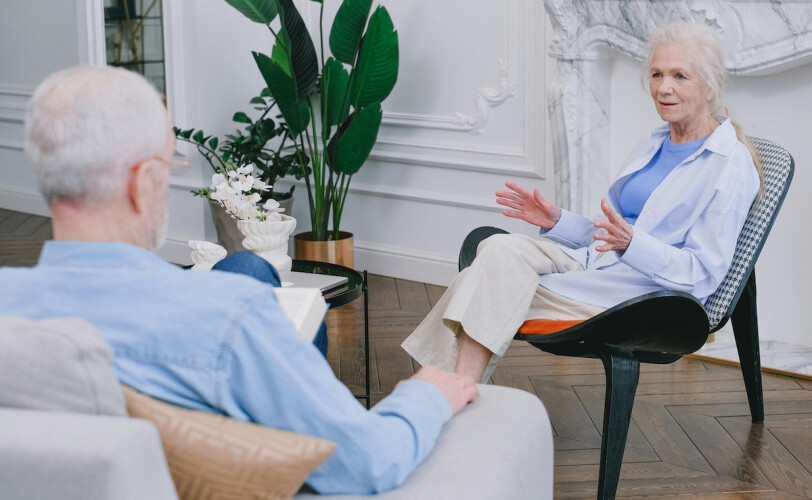
Then, suddenly, life changes shape.
Sometimes the change is one we have chosen and even longed for. Retirement after decades of work. Moving house. Beginning a new relationship. Children leaving home and finding their own way in the world. At other times, the transition arrives without invitation: a serious illness, the death of someone we love, redundancy, divorce or a diagnosis that changes how we see the future.
Responding to change and loss
Whether welcome or unwelcome, major life transitions often leave us feeling surprisingly unsettled. Alongside relief or excitement, there may be sadness, anxiety, uncertainty or even guilt that we are struggling with something we thought we wanted. It is entirely possible to feel grateful and grief-stricken at the same time.
As a counsellor, I have spent many years working alongside people navigating these moments of profound change. Increasingly, however, I have found myself living through them too. The death of my partner several years ago, a period of health uncertainty, relocating to a completely new part of the country and, more recently, beginning to wind down a career that has been central to my identity for over forty years, have all reminded me that none of us stands outside the experiences we seek to understand in others.
One of the things that major transitions often challenge is our sense of identity. We tend to define ourselves in terms of our roles in life: partner, parent, professional, carer, son or daughter, friend. We build our lives around these identities until they become who we are. It is only when one of them changes or disappears that we realise how much we had invested in it.
Retirement is a good example. It is often presented as a reward after years of hard work: freedom at last. For many people it is exactly that. Yet retirement also involves relinquishing established routines, colleagues, professional identity and the satisfaction of feeling useful. It asks a question that many of us have never really considered: if I am no longer what I do, who am I?
As I gradually reduce my own professional commitments while continuing to work with a smaller number of counselling and supervision clients, I have discovered that retirement is less like stepping through a door and more like learning a new way of walking. Some days feel fulfilling and meaningful; others feel unexpectedly empty. Both experiences are part of the same journey.
Bereavement brings another kind of transition altogether. When my partner died, I came to learn that I was grieving not only for the person I loved but also for the future we had imagined together and for the person I had been within that relationship. Grief does not simply take someone away; it alters the landscape of our own lives. We are left trying to find our bearings in a place that suddenly feels unfamiliar.
One of the most surprising discoveries was that grief did not follow the tidy progression I had unconsciously expected. It has softened over time, but it also changed shape. There are still moments of deep sadness years later, often prompted by something entirely ordinary: a piece of music, a familiar place or an unexpected memory. Alongside those moments, new experiences of joy, gratitude and connection have emerged. I’ve learned that healing is not about leaving grief behind but about finding a way to carry it more gently.
Health uncertainty can have a similar effect. Waiting for appointments, investigations, or test results has a way of making the future feel suddenly fragile. During my own experience, I noticed how quickly my mind tried to fill the gaps in knowledge with certainty – usually the worst possible certainty. It reminded me how uncomfortable uncertainty is for most of us. We long for answers, even when the answers themselves may be difficult.
How can therapy help?
People sometimes come to counselling hoping for solutions, and there are certainly times when therapy can help us make decisions or discover practical ways forward. But many of life's greatest challenges cannot simply be solved. No conversation can undo bereavement. Therapy cannot erase illness. It cannot return us to the person we were before life changed.
Instead, therapy often offers something quieter and, I think, more profound.
It offers a place where we can begin to live more openly with the questions:
- How do I live without the person I loved?
- Who am I now that I have retired?
- How do I make sense of a life that no longer looks like the one I had planned?
These are not questions that can be answered in a single conversation. Sometimes they are not questions to be answered at all. They are questions to be lived.
The unexpected gift of therapy
One of the greatest gifts of therapy is that it creates a space where we do not have to rush towards certainty or pretend that everything is fine. In a culture that encourages us to stay positive, keep busy and "move on", therapy invites us to slow down. To grieve what has been lost. To acknowledge fear without being overwhelmed by it. To notice not only what is ending but also what, quietly and almost imperceptibly, may be beginning.
As I have grown older, I have become less interested in helping people get back to who they were before life changed. More often, the work is about discovering who they are becoming now. That process is rarely dramatic. It unfolds through ordinary moments: finding a new rhythm after retirement, laughing again without feeling guilty, making peace with a body that has changed or realising that uncertainty no longer dominates every waking hour.
Life changes shape many times over the years. Some changes we celebrate; others we simply endure. All of them ask something of us. With time, compassion and support, it is possible not simply to survive life's transitions but to be quietly transformed by them.
If you are facing a major life transition – whether that is retirement, bereavement, illness, a relationship ending or another significant change – you don’t have to manage it alone. Therapy may not provide all the answers, but it can offer a space to explore the questions, help you make sense of what you are experiencing and begin to find your own way forward.

Find the right counsellor or therapist for you
All therapists are verified professionals