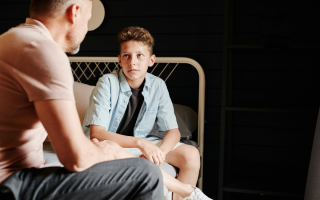
How can we improve our adult child?

We are all adult children. Our minds and entire way of thinking are guided and influenced by what happened in our early years.

“I've always felt like that.”, can be stated about fears, likes, dislikes, needs and wants. Yet in the therapy room, when we begin digging down and working our way back in time, we can pretty much always find the time when it first started. Fear of loud noises, of getting something wrong. Low self-esteem. Anxiety and the need to be in control. Anger and rages. Even tendencies for addictions can all start here. Conversely, so can happiness and positives, though I have yet to have a client come for feeling too happy. Wouldn't it be fascinating if one did?
How young are we talking? Usually, prior to the age of three. Sometimes, even before birth, this is remembered by the subconscious.
To analyse our early selves, we first need a picture of early-life events. Ready to give it a try? Since I can't hear your answer, I'm going to assume you said yes.
We start with a timeline. Take a piece of A4 paper and on the left edge, starting at the top, write 0, 1, 2, 3, 4, 5 evenly spaced down the page. Without trying to force memories, allow yourself to begin thinking back to your childhood and make a note of any memories that come at the appropriate age point. It is not a normal thing to ask our brains to do, so it can take time for memories to come. They never come in chronological order and nor should we expect them to. Our brains work by association, so one memory can lead us to another, related by event or emotion, as can old photos and anything else we have from that period in our lives.
It doesn't matter what the memories are; the fact that we remember them means they are significant to us. It is not unusual for a client to say: “I don't remember anything before the age of 10”, but as we get started, they always do. Be patient, and the memories will come. Traumas can make it harder, as our brains resist going back to such places. If you have a trauma, this isn't to be done alone – it needs to be handled with care, with a professional.
It's great if you can ask friends or relatives who were there during your early years. When we need to get to pre-birth or very early days, we become entirely reliant upon the memories of others. Just be aware, everyone remembers events according to their own frames of reference – we are biological, not electronic.
Our brains are massive hoarders, especially when developing. They hoover up every piece of information coming their way and adapt their thinking to suit it. In evolutionary terms, it makes absolute sense – better adapting us to survive the dangers of the prehistoric world where we began. Even today, it helps us become a better fit with our cultures and day-to-day experiences. We learn that hot things hurt, so not to touch them. We learn not to break things, as we will get told off. We learn to be 'well-behaved' if we want a quieter life. And we learn to feel anxious, unloved and unwanted, angry or broken, if faced with neglect or other abuse.
As we build the timeline of our early lives, we can start to identify where certain behaviours began to exist. If something, such as neediness for attention or anxiety, began from day one, it indicates it came directly from our mother, during the pregnancy. After we are born, there also come the influences around us. It is no coincidence that those growing up in abusive households can grow up to be abusers or victims themselves. Those growing up feeling unsupported or discouraged develop into adults feeling unsupported or discouraged; or they flip it the other way and go into extreme sports or work extreme hours, seeking the validation they never had.
If you suffer from anxiety, when did you first feel it? Sometimes it can be helpful to find it in reverse, by identifying the last time you felt the opposite, such as confident and happy. If you suffer from addictions, what memories or feelings are you trying to escape from? If you shout and scream at your children, who taught you that was normal? It isn't. It's abuse.
Using your timeline, if you can, pinpoint where an issue began, you can start to rationalise why you feel it in the now. Recognise the validity of why you began feeling this way, and recognise you no longer need to. What made you feel anxious back then no longer exists in your life, soit doesn't need to be there in adulthood. Yes, the feeling can be incredibly strong and stubborn to shift because our primitive brain is trying to protect us (to protect itself) and doesn't like change.
Our primitive brain clings to a learnt behaviour as it is deemed safer than risking change, yet our higher brains have the intellect to make the change. For example, hot things burn – that always remains true – but using our intellect, we learn to handle hot things using suitable kitchen gloves or tools. Our higher brain functions are more powerful than our primitive ones, if we allow them to be. As creatures of habit, the more we reaffirm the intellectual view above that of the emotional, the stronger it will become and the easier it will become to do so.
While the foundations of our early years remain for life, positives as well as negatives, we can fight against the ones we want to change. They are not set in stone. Sometimes we just need to have faith in ourselves to let go of the negatives, now empowered by the knowledge of where they began and why. And if (when) we fail at first, we don't give up. Learning new habits takes time – we're undoing a lifetime of the unwanted ones.
We are all adult children, but with the ability to improve. To become bigger and better than our childhood negatives and free ourselves from them.

Find the right counsellor or therapist for you
All therapists are verified professionals