Family estrangement: understanding when distance is needed

Family relationships can be among the most meaningful connections we have, and also among the most painful when they become strained. When things break down, it can leave people feeling hurt, confused, shut out, or simply not understood by the very people they expected to feel closest to.

Many people seek therapy for family issues because of emotional distance or complete estrangement within their families. In my experience, these relationships rarely break down because of a single moment. More often, they have been shaped over time through repeated misunderstandings, emotional reactions, and a gradual loss of feeling heard on both sides.
Estrangement can sometimes feel like the only way to cope. A way to create space or protect yourself from ongoing emotional hurt. And there are situations where that is exactly what it is.
But in many other situations, it can be worth slowing things down enough to really understand how things reached that point in the first place.
How family estrangement tends to develop
Estrangement is rarely sudden. It usually grows out of a pattern rather than an event.
Something gets said or done that feels painful. One person tries to explain how it landed for them. The other person hears it as blame or criticism. They respond defensively, or try to justify themselves, or shut the conversation down altogether. And just like that, something shifts in the relationship.
Over time, this becomes a familiar cycle. One person feels unheard. The other feels accused. Neither feels properly understood. And instead of staying curious about each other's experience, both begin to protect themselves. That is usually when distance starts to grow.
Misattunement is often at the centre of it
A word often used in therapy is misattunement.
This is what happens when one person's emotional experience is not really recognised or understood by the other person. It does not mean anyone is intentionally causing harm. In fact, most of the time people are trying their best, just in very different emotional languages.
What feels like care or concern to one person can land as pressure or judgement to another. What feels like a small comment can feel surprisingly loaded to someone else.
If there is no space to stay with that difference and become curious about it, it often gets interpreted personally instead. So rather than "We are experiencing this differently," it becomes "You are wrong" or "You are attacking me."
That is usually where things start to harden.
Parents and adult children: where this often shows up
One of the areas where this is most clearly seen is in the relationship between parents and their adult children.
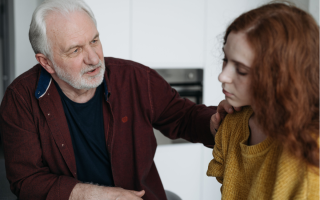
There is often a very real emotional shift that happens when children become adults. Parents may still feel a strong pull to stay closely involved, to guide, to care, and to stay connected in the way they always have. At the same time, adult children are often trying to find their own independence, their own voice, and a clearer sense of boundaries.
What a parent experiences as love or concern can be felt by the adult child as pressure or a lack of acceptance. What an adult child experiences as independence can feel to a parent like rejection or emotional distance.
Neither experience is wrong. But if neither is really understood, both people can end up feeling hurt and shut out.
So is estrangement always the answer?
Sometimes, yes. There are situations where there is abuse, ongoing harm, or a lack of emotional or physical safety. In those cases, distance can be necessary and protective.
But many situations are not about abuse. They are about patterns that have built over time. Misunderstandings that have not been repaired. Emotional reactions that have escalated without enough space to really slow down and understand what was happening underneath them.
In those situations, it can be helpful to ask not just what happened, but what each person was actually experiencing at the time. That question can sometimes change the direction of things.
Repair is not about deciding who is right
Repair does not mean agreeing. And it does not mean pretending nothing happened or forcing closeness that does not feel safe. It is about learning how to talk about impact without it becoming blame, and learning how to listen without immediately moving into defence.
Instead of "You always do this" or "You never listen," it becomes more like "This is how that felt for me" or "This was the impact it had on me."
That might sound simple written down, but in reality it can be very difficult when there has already been hurt or distance. It requires a different kind of attention in the relationship. A little more curiosity, and a little less certainty about being right.
Understanding the pattern
When relationships begin to break down, the focus naturally shifts to what the other person has done wrong. While this is understandable, lasting change often comes from understanding the pattern that has developed between people rather than searching for someone to blame.
This may involve recognising emotional triggers, understanding why certain conversations repeatedly end in conflict, and learning how to express difficult feelings without criticism or defensiveness. It can also mean becoming more curious about another person's experience, even when it feels very different from our own.
Although this does not guarantee reconciliation, it can help people respond differently to one another and make more informed decisions about the future of the relationship.
A more honest way forward
Not all relationships can be repaired, and not all should be. In some situations, distance is the healthiest and most appropriate choice. But in others, especially where things have become stuck through misunderstanding and emotional reactivity, there can sometimes be more possibility than it first appears.
Even where people do not return to a close relationship, there can still be value in understanding what happened more clearly, reducing resentment, and knowing that every opportunity was given to understand one another.
For many people, that alone can make a difference to how they carry the relationship forward.

Find the right counsellor or therapist for you
All therapists are verified professionals