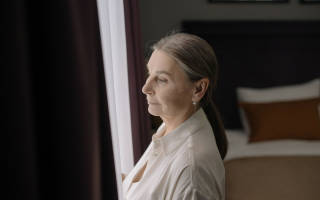
The feeling no one names: on being invisible

There is a particular kind of feeling that is hard to define. It is not quite loneliness, nor is it rejection. It is not even an absence. Rather, it is something subtler and more nuanced: the experience of being present – as in participating, contributing, showing – and yet somehow not quite feeling like you’re registering in the minds of others. We might call it invisibility.
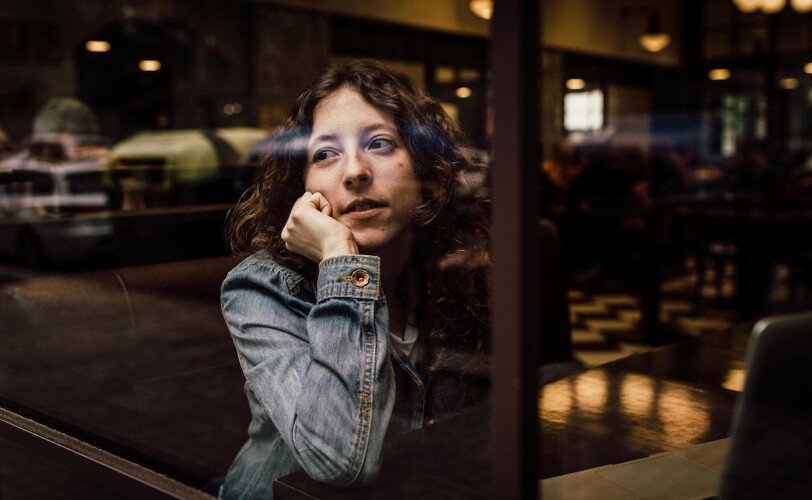
What does it mean to feel invisible?
This sense of invisibility can arise in many contexts. Of course, it goes without saying that I’m not suggesting that we believe that we are literally unseen – something far more imperceptible is at play. It might happen at work, at a dinner table, in meetings, at social gatherings, and increasingly within the curated spaces of social media. Our voice, identity or character seems to be diminished, muted, diluted, or quietly overlooked.
The invisible feeling might come if we initiate conversation and have little response, offer an idea that falls on deaf ears, or try to reach out to people and never hear back. All these different situations might leave one feeling as though we’ve slipped through the social fabric without leaving a trace.
What is striking is not only how common this experience appears to be, but how rarely it is named. A few months ago, in a moment familiar to many therapists, I asked a client how she was feeling. “Invisible,” she said. My instinct was to translate – to question whether she meant unacknowledged, unheard, or disengaged from. But she repeated it, simply: “invisible”. In her case, this feeling spanned both her professional life and her social world. It became clear that invisibility was not a single emotion but a composite – a blending of experiences that culminate in feeling unseen.
We often think of emotions as discrete categories: fear, joy, anger, sadness, etc, but much of human experience lives in the spaces between. Invisibility may be one of these blended states: part self-doubt, part quietness, part insecurity, perhaps tinged with a sense of diminishing confidence. This client, a woman in her fifties, referred to her presence as though it was shrinking. Beneath her words lay a more fundamental question: Do I still matter?
How invisibility builds up
Invisibility rarely arrives as a single, defining moment. More often, it is cumulative. A slow drift shaped by small, almost imperceptible interactions. Over time, as environments shift and norms evolve, particularly as we move towards and beyond middle age, many are more likely to find themselves adjusting to new modes of communication, new cultural rhythms, and new expectations of presence. The result can be a quiet recalibration: speaking a little less, offering fewer opinions, and withdrawing, albeit maybe subconsciously, slightly from the social field.
For some, these moments pass without much weight. For others, they carry a deeper pain, especially when there is a memory of having once felt more visible, more recognised. This same client became preoccupied with the simple act of entering a room, noticing how often she was not greeted or acknowledged by people she knew. These are not dramatic exclusions, but subtle absences, moments that accumulate and begin to shape one’s sense of self in relation to others.
What influences (in)visibility
There are, of course, many factors that might contribute to this experience. Personality shapes visibility: more assertive or dynamic individuals tend to occupy the foreground, while quieter or more reflective voices risk being eclipsed. Another client of mine described how his contributions to work conversations would be acknowledged in passing, only to be later rephrased and amplified by a more dominant colleague. Subsequently, they never felt they got the credit.
The psychologist Carl Rogers wrote of the deep human need to feel understood – to have one’s inner experience accurately perceived by another. For those who are quieter or more understated, the challenge is not simply being heard, but being waited for. Yet in a world that increasingly rewards speed, visibility, and immediacy, the capacity to wait, to make space for slower, more reflective voices, has become rarer.
Visibility, ageing, and identity
Age can clearly play a role, particularly in a culture that often privileges youth and novelty over continuity, and visibility over depth. In professional environments, those who are long-established can become part of the background – reliable, familiar, but less remarked upon.
As people move through midlife and beyond, visibility can subtly shift in ways that are difficult to articulate. Some describe a feeling of fading slightly from social attention, no longer occupying the same psychological space in the eyes of others. This can leave individuals questioning not only how they are perceived, but who they are becoming.
Invisibility in relationships
Invisibility takes on another dimension in the search for connection, particularly in midlife friendships and romantic relationships. I’ve heard people mourn a time when they felt more visibly recognised as physical and sexual beings, when they were noticed, checked out, or maybe quietly desired. For some, there is a sense of loss in no longer being “seen” in this way.
At the same time, others describe a certain relief in being freed from those social pressures, even while still appreciating the occasional moment that reassures them they are not physically conspicuous. These mixed feelings highlight the complex interplay between visibility, identity, and how we experience ourselves through the eyes of others.
Social media and the pressure to be seen
In the world of online dating, the experience is often less about rejection than about non-recognition. Profiles, carefully constructed representations of the self, can seem to vanish into an algorithmic void. We live in a paradoxical age: one of hyper-visibility, where images and fragments of identity are constantly on display, yet where this exposure does not necessarily translate into being truly seen. If anything, it can deepen the sense of invisibility.
All of this unfolds within a broader cultural context that increasingly equates visibility with value. To exist, it can feel, is to be seen, and not just to be seen, but to be seen being. Professional branding, personal curation, and social media presence reinforce this expectation. Even for those who resist such performative modes of living, the cultural emphasis on visibility is difficult to escape.
Reclaiming visibility
And yet, the experience of invisibility is rarely confined to the therapy room. It appears among colleagues, friends, and, at times, within oneself. It is not a single event but an accumulation of small moments: micro-invisibilities. Over time, these experiences may lead to subtle shifts in behaviour: speaking less, retreating slightly, offering fewer parts of oneself to the world. It is not a dramatic withdrawal, but a quiet adaptation, a recalibration of presence in response to not quite being seen.
So how do we manage this? In many ways, it comes down to attention and perception, and how these interact with our confidence. If the goal is to feel more visible and to bring more of ourselves into different areas of life, it helps to anchor in self-acceptance – valuing our viewpoints, sharing our experiences, and expressing ourselves with clarity and conviction. Of course, this is often easier said than done.
It’s also important to recognise that feeling overlooked is frequently a reflection of other people’s limitations; their social awareness, biases, distractibility, or narrow expectations, rather than any measure of your worth. People may simply respond more readily to certain traits, such as volume or humour.
However, if we internalise a sense of invisibility, it can create a cycle where we withdraw further and reinforce that feeling. By gently challenging ourselves and, at times, those around us, we can begin to interrupt this pattern. Over time, this allows for a more natural and sustainable sense of visibility.

Find the right counsellor or therapist for you
All therapists are verified professionals