

Red, white… and triggered

Driving through London recently, I’ve felt a visceral response rising in my body every time I see another St George’s flag. Their presence seems to be multiplying, and with them, so are my feelings of unease.
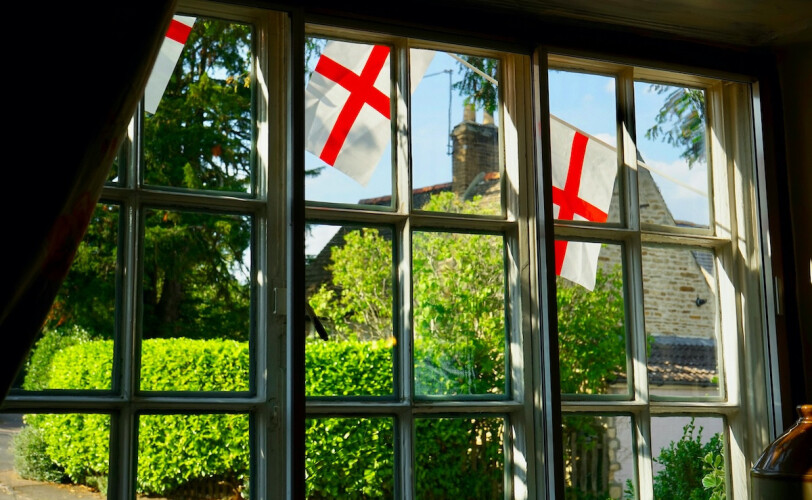
To many, the flag is a symbol of national pride. But for me, and for many others, it’s a trigger. A reminder of something more threatening beneath the surface.
Last weekend, I was in central London, near the Unite the Kingdom rally, and I felt scared. The atmosphere was thick with tension and difference, leaving a sense of being ‘othered’.
It was not the same feeling I had when I saw the Union Jack waving during the 2012 Olympics, or the sense of celebration at Prince Harry and Meghan Markle’s wedding in Windsor in 2018. Nor did it have the community spirit of the Platinum Jubilee in 2022, the sense of unity during the King’s Coronation in 2023, or even the joy of watching the Euros in 2024, surrounded by hopeful fans.
In those moments, the flag felt like a symbol of celebration and belonging. Now, it feels different. Heavy. Loaded. But context is everything.
As therapists, trainers and managers, we often talk about intention versus impact. And this is where I now sit, both personally and professionally, as we try to make sense of what’s unfolding in the world, and in the therapy room.
We need to ask: what is beneath the banner? What is the intention behind these public displays of nationalism? And what is the impact, especially on those of us from the Global Majority*.
More than just a flag
The St George’s flag has long been co-opted by far-right and nationalist groups - from the National Front and British National Party in the 1970s and 80s, to more recent movements like the English Defence League and Britain First.
For many, these flags aren’t about sport or celebration. They’re about exclusion.
This isn’t just a modern discomfort; it evokes intergenerational trauma. The fear, the tension, the sense of being unsafe in public space is deeply embedded in cultural memory. It resurfaces whenever symbols of nationalism are weaponised - used not just to express pride, but to intimidate, exclude, or assert power over others. When these symbols appear outside the context of national events, and without conversation or inclusivity, it’s worth asking: What do they represent? What message are they really sending, and to whom?
While many may display flags with a benign intention - simply wanting to express pride in England, like people do in other countries - the concern lies in how far-right and nationalist groups have co-opted these symbols. They use them to promote divisive and exclusionary agendas.
How therapy helps
Over the past few years and especially in moments like this, where national symbols carry so much emotional weight, I’ve had to reflect more deeply on how to navigate the feelings evoked in me and my clients. There are some practices I keep returning to, not because they’re perfect, but because they’ve helped;
Listening to lived experience
There was a time when I might have unintentionally minimised or reframed a lived experience to “help them feel better.” I now understand the importance of staying with what they bring without rushing to intellectualise, fix or soften it.
Understanding racialised and intergenerational trauma
Learning how trauma moves through communities, especially in response to racism and exclusion, has shaped how I understand both myself and others. My parents migrated to the UK in the 1970s, facing open hostility and systemic racism. Their fear and vigilance became part of the emotional landscape I grew up in. I inherited coping strategies before I had words for them - ways of staying small, staying safe. I now understand this as intergenerational trauma, as survival passed down. And I’m still learning which strategies serve me, and which I can let go.
Noticing what shows up in my own body
I’ve started to pay more attention to my own physical responses when race, identity, or nationalism come up in the room. It’s not always comfortable, but it gives me important information to reflect on what emerges and a reason to take it into supervision or peer spaces.
Naming difference, when it feels right
When there are racial or cultural differences between myself and a client, I’ve learned that naming this sensitively without making it the centre of the work can strengthen the relationship. It’s a practice I’m still learning to navigate with care.
Recognising racism as trauma
I used to see racism as “something painful”. Now I understand it as something traumatic. That shift has made a difference in how I listen, how I conceptualise the work, and how I support self-regulation.
Helping clients find grounding and connection
Together with clients, I explore what helps them feel safe and resourced - whether that’s community, creativity, movement, activism, spirituality, or simply rest and recovery. Each person’s needs are different.
Understanding internalised racism - in myself and others
One of the harder things I’ve had to face is how deeply racism can take root - not just out there, but inside all of us. For me, this has meant noticing beliefs or behaviours shaped by my upbringing. For others, especially white therapists, it might mean recognising how unexamined privilege, fragility, or silence can show up in the work - even with the best of intentions.
This isn’t about blame. It’s about becoming more honest, more accountable, and more human. The more I’ve learned to name these dynamics in myself, the more space I’ve been able to hold for clients navigating them too.
Making and holding space
What we see in the streets finds its way into the therapy room. Symbols like flags do not exist in a vacuum - they carry stories, legacies, and emotions.
Whether the flag outside brings comfort or discomfort, it’s worth pausing to ask: what does it mean, and who does it include or exclude?
If you’re navigating similar conversations, I’d love to hear what’s been helpful for you, too.
* Rosemary Campbell-Stephens introduced the term Global Majority; a collective term. It refers to people who identify as Black, African, Asian, Brown, Arab, mixed-heritage, are indigenous to the global south, and/or, have been routinely racialised as ‘ethnic-minorities’. Globally, these groups currently represent approximately 85% of the world’s population, making them the global majority now, and with current growth rates, notwithstanding Covid-19 and its emerging variants, the global majority is set to remain so for the foreseeable future.

Find the right counsellor or therapist for you
All therapists are verified professionals


