Grounding and mindfulness: what is it and how can it help?

We all live our lives according to our concept of 'normal': how we grew up, what we've experienced, and what we have learnt from those around us. They can also influence the way we think and respond to difficult situations later in life.
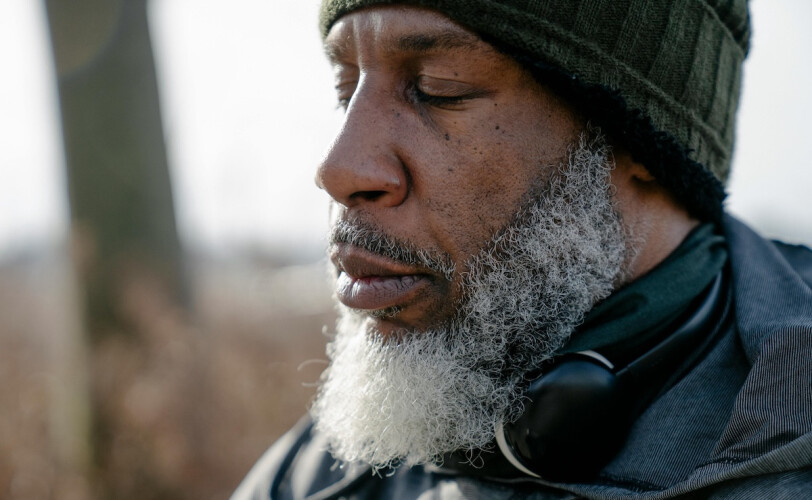
Our thought processes, which can sometimes be traced back to these earlier events and conditioning in our lives, can play a part in how we experience anxiety and depression. We can sometimes treat our thoughts as facts, even though what we think doesn’t necessarily reflect reality.
How our thoughts can interact with anxiety and depression
When we experience heightened anxiety or depression, our thoughts are not always helpful to us. Anxiety can be accompanied by fearful or worrying thoughts, while depression can involve deeply self-critical or pessimistic thinking.
None of us can halt our thoughts, but we can learn to manage them better if, firstly, we try to evaluate and challenge some of them and gain an understanding of whether or not they are helpful to us.
How we can challenge some of our thoughts
Your counsellor can teach you how to do this by helping you understand how your thoughts directly affect your emotions and create bodily reactions (psychosomatic symptoms), which in turn can affect your choices. Understanding the links between our thoughts, emotions and actions is a central tenet of Cognitive Behavioural Therapy and can be an effective method to help us challenge some of our unhelpful thoughts.
Here's an example. Imagine we greet someone we know well as we pass by, and they don't answer. A common thought might be, "They don't like me". The emotions we might then experience could include sadness, anger, and anxiety. As anxiety initiates our fight-or-flight response, our bodily reactions might include faster breathing and heart rate, while our actions might then include avoiding that person in the future or ignoring them if we meet them again.
But what if our original thought, "They don't like me", is wrong? What if the person was deep in thought about something unrelated to us, feeling ill, distracted, tired, or simply in a rush to be somewhere else? Without challenging them about why they didn't respond, we might never know, and any thought we have about their lack of response is an example of mind reading.
If instead we were to challenge a thought like this by checking in with the person in this scenario, "Are you OK? I said hello, but you didn't answer", we might learn a very plausible reason why our greeting was not reciprocated. "I was in a world of my own", or "I was honestly thinking about my bills". Our emotions might now be relief, concern, warmth, or calmness. We would be unlikely to have an anxiety response; our actions would look entirely different, and we certainly wouldn't try to avoid or ignore the person if we met again.
How grounding and mindfulness can help with rumination
Grounding and mindfulness simply mean shifting our focus from our thoughts onto the reality around us. We do this by noticing and tuning in to our senses: what we can see around us, what we can touch, hear, smell, taste.
Here’s an example. Imagine we go outside for a walk. We see houses, people, cars, trees, fields. We can feel the wind, the rain or the sun on our face; the pressure passing through our feet as we take each step on hard surfaces, soft surfaces; the feel of our clothing on our body – our coat, our trousers, skirt, shirt, blouse; the feel of anything that we choose to reach out and touch – the coldness of metal, for example
We can hear traffic, the wind blowing, people conversing, machinery operating, birds, insects, and if we stick out our tongue, the town and the country will likely give us a different taste sensation. For example, walking past a hot food restaurant will give us a vastly different taste sensation than a freshly harvested field. Try it and see!
We do not even have to be outside. If we are inside, we can focus on our breathing: breathing gently in through our nose and exhaling through our mouth, and noticing the rhythmic rise and fall of our diaphragm. We can also focus on the room we are in, the furniture, colours, textures, distance and spacing, and we can reach out to touch and feel different surfaces.
The role of optimum breathing and progressive muscle relaxation
Your counsellor can teach you the art of optimum breathing, a technique for lowering a triggered anxiety response, which entails breathing calmly, fully inflating and then deflating your lungs.
As we practice our breathing, we can also incorporate progressive muscle relaxation, tightening our muscles as we breathe in and relaxing them again as we breathe out. Try this. Lift your heels off the floor as you breathe in, then lower them again as you breathe out. This will tighten your calf muscles.
Our body has a range of muscles we can tighten and relax while engaging in controlled, optimum breathing: our buttocks, thighs, hands, arms, stomach, neck, shoulders, jaw, face, and eyebrows. Isolate and tighten or tense each muscle, or pair of muscles, as you breathe in and then relax them again as you breathe out. You can do them in any order you like, and once you feel competent, you can try tensing several groups or different groups at the same time.
Focusing on our breathing and engaging in progressive muscle relaxation exercises can help engage our cognitive brain and provide some much-needed respite from constant ruminating.
What about using some cognitive distractions?
We can also use cognitive skills to do much the same thing, such as spelling backwards the things that we see in our room. For example, floor spelt backwards is roolf, lamp spelt backwards is pmal. It's challenging, but after some practice it can also be weirdly enjoyable. As an add-on, once we have spelt a word backwards, we can try to think of how many things we can name beginning with each of the letters.
Another cognitive skill we can try is counting. Pick, for example, the number 300. In our head, we start counting backwards in 7s: 300, 293, 286, 279, etc. When we get to 0, we can start counting upwards this time, adding 7s. Again, this is challenging but enjoyable, and with practice we become skilled, and then we can add upwards or backwards using any number, odd numbers, even numbers; you get the picture.
All of these techniques we have read about will help us develop skills that let us pause and interrupt our constant flow of thoughts for a little while, which helps us regain a sense of perspective and control. However, we will have to practice.
In the beginning, as we learn new techniques, our thoughts will constantly break through. This is OK and perfectly normal. If this happens, we simply reset and go again. The more we practice grounding, mindfulness skills and cognitive distraction techniques, the better we will get at keeping our unhelpful intrusive thoughts at bay, which is an important step towards reducing our anxiety and low mood.
The role of counselling
All or some of what you have just read will hopefully help you manage some of the ways heightened anxiety or depression can affect your life. However, if you would like to explore what may be contributing to how you are feeling, counselling can offer a space to do this with a qualified therapist.
This can increase your self-awareness and help you identify and begin implementing necessary self-care practices. Think of the process as being akin to having a headache for which you might take painkillers. If the headache doesn't go away or keeps recurring, then rather than continuing to take painkillers whose effect will likely diminish over time, we need to investigate the cause. Counselling can help to investigate the cause.
If you feel counselling could be helpful, reach out to a professionally qualified counsellor.

Find the right counsellor or therapist for you
All therapists are verified professionals