

Embracing change and imperfection: A recipe for growth

What can nature teach us about change?
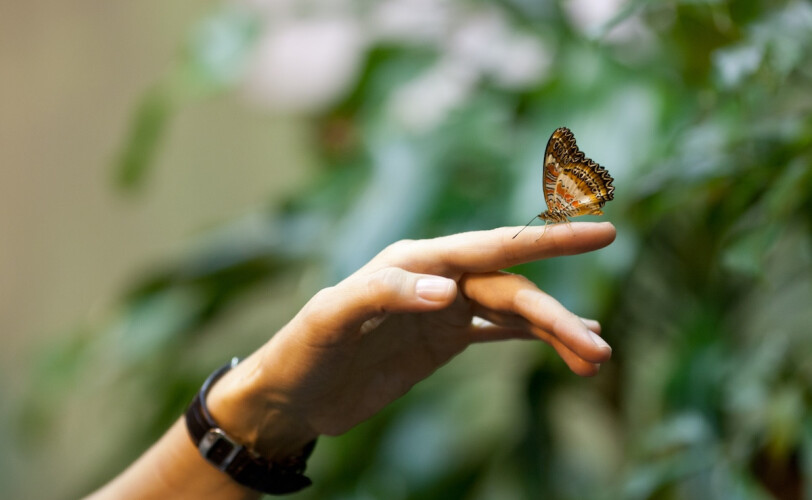
That caterpillars transform into butterflies is probably well known, but exactly how they do so might come as a surprise. Having decided that now is the time to change into something more glamorous, caterpillars find a leaf or a twig to hang from and spin themselves a small apartment – a chrysalis or cocoon – to find a bit more privacy. So far, so well known.
What’s less often explained at school is exactly what happens next. They digest themselves. Inside their cocoon, they release enzymes to dissolve all of their tissues to create a kind of caterpillar soup. No wonder they do it all behind closed doors.
Then, once fully digested, the building blocks of their butterfly-like shape that have lain dormant within them throughout their life until now, draw on the rich liquid to form an entirely new, though related, organism. Once fully developed, it emerges from the cocoon to fly away.
That theme of transformation is a running one in nature. Snakes do it with their skins. Crawling away into a safe place where predators can’t find them in their vulnerable state of change, they shed the outer layer, leaving behind a version of themselves that exactly resembles who they were only now, lifeless and dead.
Even the good old conker (that staple of 1970s autumn playground competition), once in the ground stirred by the cold of winter and then fed by the moisture and warmth of Spring, breaks down and leaves its previous shape to let something burst out of it – one day blossoming into a mighty tree.
Transformation takes time – and privacy
It's no wonder, though, that conkers hide in the ground, snakes crawl somewhere safe, and caterpillars draw the curtains. Change isn't just dangerous, it’s also terribly exposing.
To admit a need to change seems to suggest that we’ve been mistaken, that we’ve been wrong, and somehow are less than adequate, which excites all kinds of latent feelings of worthlessness. ‘Sorry’ really can seem to be the hardest word when it comes to admitting that there’s something in us that’s not been what it might have been. Yet, making mistakes is an inevitable – and essential – part of living.
I once worked with a man who’d come over on one of the boats from the West Indies in the 1950s and, among other things, brought with him some of the islands’ gentle wisdom. “A person who hasn’t made a mistake”, he used to say, “hasn’t made anything”.
I rather wished he didn’t feel the need to say it to me as often as he did… but he was right. You can’t do anything without running the risk of making a mistake, and more often than not, that’s what will happen as part of the process of achievement. Failure is only the other side of the coin to success.
Perfectionism: The quiet enemy of progress
”To live is to change and to be perfect is to have changed often”, once wrote John Henry Newman, a 19th-century poet, historian, philosopher, and theologian.
Becoming a better person, becoming the person we’d like to be, is a process of transformation that takes a lifetime. Each day, hour, minute and second offers the opportunity to learn from our experiences. But that’s hard, and often we can get crushed by the spectre of perfection that we, and the world around us, need us to achieve if we are to feel in any way halfway good about ourselves.
That phrase, ‘Perfection is the enemy of the good’, is spot on, pointing out that if we can only ever be satisfied with things that are perfect, we won’t be able to recognise something that is simply good when it comes along.
Learning to embrace 'good enough'
Or, good enough, as Donald Winnicott, a well-known psychotherapist from the last century, might say, not only, perhaps, to encourage us to be understanding of our inevitable human fallibility but also to remind us to be real about ourselves and the world we live in.
A ‘good enough’ outlook leaves a bit of wiggle room to slide past those feelings of worthlessness and lack of self-esteem that can make embracing our mistakes (and the change they can be the prelude to) so hard to enable.
The 'fridge soup' philosophy of life
And it's what we need to say when making fridge (as opposed to caterpillar) soup. Fridge soup relies on the phrase ‘that’ll do’ (aka ‘good enough’) and is made up of anything found at the bottom of the vegetable drawer of your fridge. Boil it, blend it, enjoy it. Sometimes we just have to make the best of what we are and let that be enough.
A challenge, but one we don’t have to face alone
One of the things that makes change so hard is that it threatens our very existence: it invites an old part of us to die in order for something new to emerge. No matter how much we might yearn for that, it is a trauma which, perhaps understandably, we sometimes shrink from. We want it, but resist it at the same time.
The kind of counter-intuitive thinking that change requires can really benefit from having someone to talk to about it. Caterpillars, snakes and conkers transform themselves alone, but we don’t have to. Friends can be really helpful, but sometimes having a skilled and well-trained professional therapist or counsellor to think things through with can make all the difference. It is an investment of time and resources, but many people find that it is one well worth making.

Find the right counsellor or therapist for you
All therapists are verified professionals


