When work clothes become a warning sign in trauma-exposed roles

Are your work clothes still sitting on the ironing pile because you just couldn’t bring yourself to look at them? Or are you the kind of person who has them washed, ironed and neatly put away as a way of closing out your week – a quiet little ritual that says, done now.
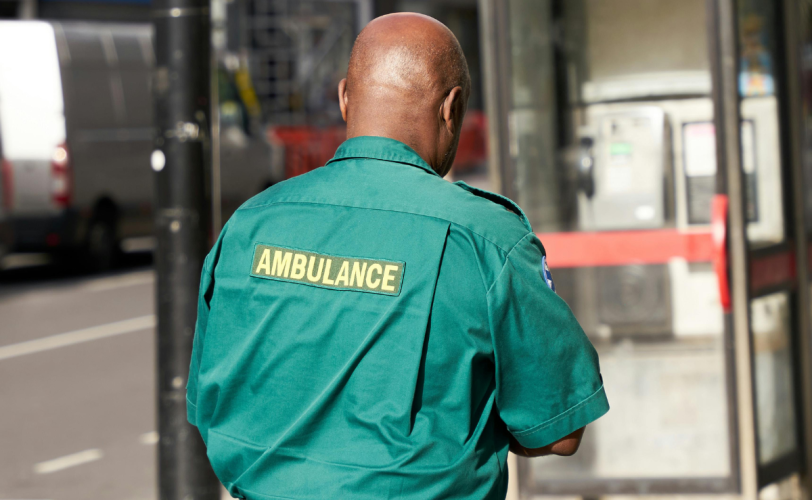
The third option (my favourite) is they’re crumpled in the corner of the bedroom where they were almost torn off ceremoniously, like you were trying to peel the job off your skin.
If you work in trauma-exposed roles, you’ll know this isn’t really about organisation or laziness. It’s about what your nervous system has learned. The body keeps its own diary. It remembers the tone of a building. The smell of a corridor. The way a Monday morning feels before anything has even happened.
For people in social care, safeguarding, family courts, refugee and asylum services, domestic abuse provision, emergency medicine, ambulance services, policing, probation – the trauma isn’t always a single dramatic incident. Often, it’s cumulative. A steady drip of exposure: stories, images, decisions, consequences.
You hold it, absorb it, and then you go home and try to be a partner, a parent, a friend – a normal human being who can eat dinner, sleep properly, laugh at something small. And sometimes you can’t.
What vicarious trauma is (and why it isn’t “just stress”)
Vicarious trauma is what can happen when your work requires repeated contact with other people’s trauma. You may not be the one harmed, but you are the one listening. Witnessing. Responding. Writing it up. Making judgment calls under pressure while someone else is reliving the worst thing that’s ever happened to them. Over time, that can change things.
Not always in obvious ways. Not always straight away. But slowly, your assumptions about safety, trust and risk can shift. You might find yourself scanning situations more than you used to. You might become jumpier, flatter, quicker to irritation. Or you might feel nothing at all, which can be even more unsettling, because you remember what it used to feel like to care without paying for it afterwards.
People often confuse this with burnout. Burnout is real, and there’s overlap. But vicarious trauma has a different texture. It doesn’t just exhaust you – it can alter how your body expects the world to behave. And it can be delayed.
Some people keep functioning for months, even years – competent, reliable, the one who “can handle it” – and then it arrives later, sideways: in sleep, in relationships, in a sudden dread that doesn’t have a clear cause. Like your system has been keeping the account open, and one day it presents the bill.
When trauma work echoes your own history
There’s another layer that makes everything more complicated: sometimes the material you meet at work presses directly on your own past. That doesn’t mean you’re unfit for your role. It means you’re human.
If you’ve lived through neglect, violence, instability, loss – anything that taught your body to brace – then certain cases, certain voices, certain dynamics can touch something old. The impact becomes a double event: the trauma you’re exposed to in your job, and the way it activates what was already there.
This is why “a bit of support” can feel nowhere near enough. It’s also why quick fixes can feel almost insulting. Because what’s happening isn’t simply tiredness. It’s an intrusion. Echo. Activation. Sometimes, grief you didn’t know you were still carrying.
And you can be brilliant at your work and still be vulnerable to this. In fact, the people who care most, notice most, and hold most are often the ones whose systems take the biggest hit.
How it can begin in high-functioning people
Most people don’t fall apart at work. They become compliant. A quiet internal sentence appears: “I’ve got no choice.” You go in even when your whole system is asking you not to. Not because you’re noble. Because stopping feels dangerous. Because permission feels like a trap. Because you’ve learned, often long before this job, that people depend on you and you don’t get to be the one who needs help. So you keep going.
And then the subtler signs begin to show:
- your Sunday nights feel wired, shallow, uneasy
- you wake already braced, as if you’re walking into threat
- you get sharper with “admin” because it feels like a second injury
- you go home and you’re not just tired – you’re emptied out
- you scroll, drink, snack, keep busy, because silence feels too loud
- your capacity shrinks – you lose patience faster, recover slower, and normal life starts to feel oddly demanding
Often, what you notice first isn’t even the big stuff. It’s the small distortion. You don’t quite recognise yourself. You’re still functioning – but you’re functioning from a narrower place.
The real problem isn’t your reaction – it’s the system’s shrug
The profession loves the language of self-care, but the real issue is how often organisations treat vicarious trauma as an individual problem with an individual solution.
A well-being webinar. A poster. A helpline. Sometimes a neat offer of short-term support is designed to get you “back to baseline” quickly, as if baseline is a place you can return to without changing anything about the environment that hurt you.
But vicarious trauma doesn’t always work like that. Some exposure is deep. Some exposure is cumulative. Some exposure activates older wounds. Some consequences don’t show up for months. And in many trauma-facing roles, the organisational culture quietly depends on staff absorbing more than is reasonable, then coping privately, then turning up again.
This isn’t about “all managers are evil”. Plenty of leaders care deeply. Some organisations do this well. But many don’t. And where support is thin, inconsistent, or purely managerial, the message, however unintended, becomes: We know this hurts you. Carry on anyway.
That isn’t supervision. That’s containment without change. Proper supervision in trauma-facing work isn’t just a space to speak. It’s a structure with teeth. It has to be regular, protected, psychologically informed – and it has to connect upwards. Because if supervisors can only support the individual but can’t influence caseloads, staffing levels, rota patterns, debriefing, training and boundaries, the system stays the same and the worker becomes the sacrifice.
And it starts earlier than most HR departments want to admit. Recruitment isn’t only about qualifications. It’s about context. Support. What someone is already carrying. What helps them recover? What makes them more vulnerable? Not to exclude people, but to protect them properly once they’re in.
How counselling can help with vicarious trauma
One of the most damaging side effects of vicarious trauma is isolation. You can be surrounded by colleagues all day and still feel like you’re carrying your reaction alone. Many people in trauma-exposed work also develop a kind of emotional professionalism – you become very good at coping. Which can mean you don’t notice the cost until it has travelled into sleep, relationships, appetite, alcohol, anger, numbness, or that low-grade dread that won’t shift.
Counselling offers something that is often missing in high-pressure systems: a protected space where your response matters.
A good counselling relationship can help you:
- name what’s happening without minimising it or turning it into a performance
- make sense of the patterns – what your body is doing, what your mind is expecting, what you’ve normalised
- separate “work material” from “your material” when the content at work echoes older experiences
- rebuild recovery in a way that’s real – not aspirational self-care, but practical ways of coming back into your body and your life
- strengthen boundaries so that empathy doesn’t mean absorption, and caring doesn’t mean being colonised by the job
- work through guilt – the very common guilt of stepping back, saying no, or admitting you’re affected
Importantly, counselling isn’t about making you “softer” or less capable. If anything, it can help you become more honest about what this work costs, what you need in order to keep doing it, and what has to change if you’re going to remain in the field without losing yourself.
Quiet landing
Work clothes are just fabric. But in trauma-exposed roles, they can become a signal: the moment your body starts gearing up to survive the day. So take a moment before the week begins – not to judge yourself, not to “be positive”, but to tell the truth: What does this work take from you, week after week? And where, exactly, do you go to get it back – before the shift, after the shift, and in the quiet spaces nobody else sees?

Find the right counsellor or therapist for you
All therapists are verified professionals