When being strong becomes exhausting

"You're so strong". For many women, those words are intended as a compliment, and often they are. Being strong can mean being dependable, resilient and capable. It can mean showing up when life is difficult. It can mean finding a way through challenges that once seemed impossible. Yet there is another side to strength that is rarely spoken about.
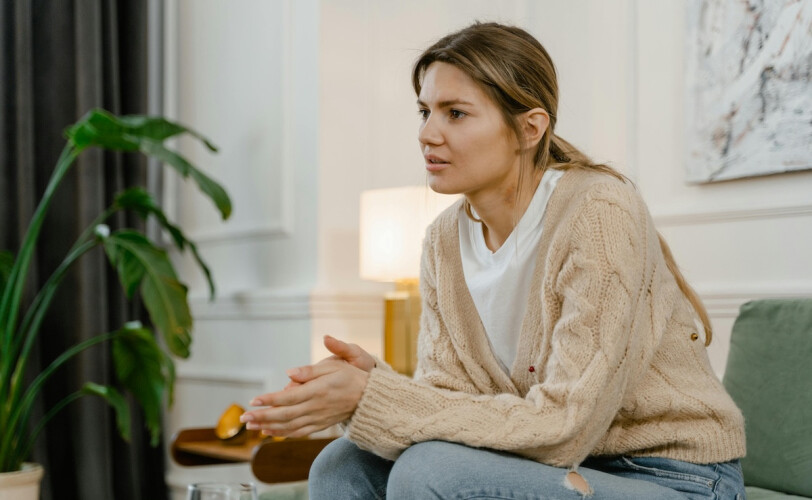
Because sometimes the women who are described as "strong" are also the women who feel unable to stop. The women who carry the responsibility for everyone else. The women who struggle to ask for help. The women who appear to be coping while quietly feeling overwhelmed.
Over the years, I have spoken with many women who arrive in counselling feeling exhausted, anxious or disconnected from themselves. They often begin by saying things such as:
- "I don't know why I'm struggling"
- "Other people have it much harder than me"
- "I should be able to cope"
- "I've always been the strong one"
There is often a sense of guilt attached to their distress. After all, if you are the capable one, the organised one, the one everyone relies upon, surely you should be able to manage. But what if the problem isn't a lack of strength?What if it is the cost of carrying too much for too long?
The invisible load
Many women carry what researchers often describe as emotional responsibility or the "mental load". This includes not only practical responsibilities but also the emotional work of anticipating needs, managing relationships, remembering important details and ensuring that everyone else is OK.
Who needs a birthday card? Has Mum remembered her appointment? How is my friend coping after her divorce? Did I reply to that message? What needs doing next week? The list is endless. While some responsibilities are visible, many remain unseen. They exist as a constant stream of mental and emotional activity running in the background of daily life.
Research has increasingly highlighted the unequal distribution of this invisible labour within many families and relationships. Yet even when circumstances change, many women continue to carry a deep sense of responsibility for the well-being of others.
Over time, this can become exhausting. Not because they are weak, but because nobody is designed to carry everything indefinitely.
When strength becomes an identity
Sometimes strength is more than a characteristic. It becomes part of who we believe ourselves to be. Perhaps you were the child who learned not to create additional problems because there was already enough going on at home.
Perhaps you became the peacemaker, the helper or the responsible one. Perhaps you learned that being useful brought approval, safety or a sense of belonging. None of this is conscious.
Children adapt remarkably well to their environments. We learn what is expected of us. We discover which parts of ourselves are welcomed and which parts may need to be hidden. For some women, strength became a survival strategy long before they recognised it as one.
As adults, these patterns can become so familiar that they simply feel like personality:
- "I'm independent"
- "I don't like asking for help"
- "I just get on with things"
- "I prefer to sort things out myself"
While these qualities can be valuable, they can also make it difficult to recognise when support is needed.
The problem with always coping
One of the challenges faced by women who have spent years being strong is that other people often believe they need less support than they actually do. Friends assume they're fine. Partners assume they can manage. Family members continue to rely on them. Even therapists sometimes hear clients describe years of coping before finally reaching a point where something has to give.
The psychologist and researcher Dr Kristin Neff, known for her work on self-compassion, has written extensively about the ways people can become trapped in patterns of self-criticism and relentless self-reliance. Her work suggests that treating ourselves with the same kindness we readily offer others is not self-indulgent; it is an important component of psychological well-being.
Yet many women find compassion easier to offer than to receive. They can support a struggling friend without hesitation, but when it comes to themselves, however, the standards are often very different. They expect themselves to keep going, push through and cope.
Anxiety doesn't always look like anxiety
One reason women sometimes delay seeking support is that they do not recognise what they are experiencing as anxiety. When people think of anxiety, they often imagine panic attacks or obvious nervousness, but anxiety can take many forms.
It may look like:
- constant overthinking
- difficulty relaxing
- feeling responsible for everyone else's happiness
- struggling to switch off
- over-preparing for every possibility
- finding it difficult to make mistakes
- feeling guilty when resting
From the outside, these behaviours can appear highly functional. In fact, they are often praised. The person who is organised, efficient and always available is usually viewed positively, yet underneath, there may be a nervous system that rarely feels truly safe enough to rest.
Psychologist and researcher Dr Gabor Maté has frequently spoken about the relationship between chronic stress, caregiving patterns and the tendency to prioritise others' needs over our own. While every individual's experience is unique, many women recognise themselves in this dynamic.
The challenge is that a coping strategy that once helped us can eventually begin to cost us.
The loneliness of being the strong one
Perhaps one of the least discussed aspects of strength is loneliness. When people see you as capable, they may not think to ask how you are doing. When you are used to supporting others, it can feel unfamiliar or uncomfortable to be supported yourself.
Some women describe feeling deeply connected to others while simultaneously feeling unseen. They know everyone's stories, but few people know theirs.
Over time, this can create a quiet sense of isolation, not because there are no people around them, but because there are very few spaces where they feel able to put down the role they have been carrying. To admit uncertainty, acknowledge sadness or to say, "Actually, I'm finding this difficult".
Learning a different way
The goal is not to stop being strong. Strength itself is not the problem. The problem arises when strength becomes the only option available. Healthy strength includes flexibility and allows us to ask for help when we need it, to acknowledge vulnerability, rest without guilt and to recognise our own needs as worthy of attention.
This is often where counselling can help. Not by taking away the qualities that have helped you navigate life, or by encouraging dependency, but by creating space to explore the patterns that may no longer be serving you.
Many women discover that underneath their exhaustion is not weakness but unmet need. A need for support. A need for care. A need for permission to stop carrying quite so much.
A different question
Women who have spent years being strong often ask themselves: "Why can't I cope better?" "What is wrong with me?" "Why am I struggling when I've managed before?"
Perhaps a different question is needed. Instead of asking why you are finding things difficult, you might ask:
- How long have I been carrying this alone?
- What expectations have I placed upon myself?
- When did I learn that I had to be the strong one?
- And what might become possible if I no longer had to carry everything by myself?
Sometimes healing begins not with becoming stronger, but with recognising that strength was never meant to mean carrying the weight of the world alone.

Find the right counsellor or therapist for you
All therapists are verified professionals