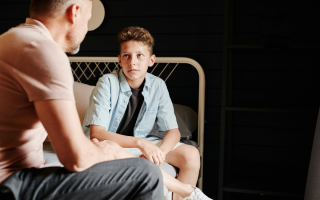
Understanding family conflict

Family is often described as our safe place. We grow up surrounded by messages that family is forever and that no matter what happens, everything works out in the end. Films, television and social media frequently reinforce the idea that families can blend happily, eventually reconcile and live happily ever after. Real life is rarely that straightforward.

Families can be one of our greatest sources of love, belonging and support. They can also be one of our greatest sources of stress, disappointment and heartache. Relationships change. Couples separate. Parents begin co-parenting. New partners enter the family. Children grow up. Adult siblings drift apart.
Sometimes, despite everyone's hopes, relationships become so painful that family members stop speaking altogether. If you've experienced this, you are far from alone.
Family estrangement is more common than many realise
Although it is rarely talked about openly, family estrangement is becoming increasingly recognised. Research suggests that around one in four people experience some form of family estrangement during their lifetime (Blake, 2017). Whether temporary or permanent, the emotional impact can be profound.
We also see family conflict played out publicly. Celebrities, public figures and members of the royal family have all shared stories of fractured relationships, reminding us that no family is immune from difficulties. Behind closed doors, many ordinary families are navigating similar challenges, often silently.
Why is family so complicated?
Every person brings their own personality, experiences, expectations and emotional wounds into family relationships. A family is not simply a group of people living under one roof. It is a complex emotional system in which one person's behaviour affects everyone else.
Family systems theory, developed by psychiatrist Murray Bowen, suggests that individuals cannot be understood in isolation because they are deeply interconnected with those around them (Bowen, 1978). This means that when one relationship changes, the whole family often has to adapt.
Conflict may arise because of:
- different communication styles
- unresolved childhood experiences
- divorce or separation
- blended families adjusting to new roles
- jealousy or loyalty conflicts
- different parenting approaches
- addiction or mental health challenges
- differing values or lifestyles
- longstanding resentments that were never addressed
Sometimes, nobody is intentionally trying to cause harm. Other times someone may repeatedly behave in ways that are manipulative, controlling or emotionally damaging. Recognising the difference is important.
The challenge of blended families
Blended families can bring enormous joy, but they can also bring unique challenges.
Children may feel caught between households. Parents may experience guilt. New partners may struggle to find their place. Step-siblings often need time to build relationships naturally, rather than being expected to become instant best friends.
Research consistently shows that successful blended families often take several years to establish new routines and relationships. Patience is essential. Trying to force closeness usually creates more resistance.
Co-parenting after separation
When a couple separates, the relationship between partners may end, but the parenting relationship continues. This can be one of the most emotionally demanding transitions adults face.
Children generally benefit when parents are able to communicate respectfully, avoid involving children in adult conflict and provide consistency across both homes (NICE, 2020).
This does not mean parents have to agree on everything. It means putting children's emotional well-being ahead of unresolved relationship difficulties.
Accepting the new normal
One of the hardest aspects of family change is grieving the family we imagined we would have. Many people spend years hoping relationships will return to how they once were. Sometimes they do. Sometimes they don't.
Acceptance is not the same as approval. It simply means recognising reality as it currently exists rather than continually fighting against it. Acceptance allows us to focus our energy on what we can influence instead of what we cannot.
It may involve adjusting expectations, setting healthier boundaries or accepting that some relationships need distance in order for everyone involved to remain emotionally safe.
Communication really does matter
Communication is often described as the cornerstone of healthy relationships and for good reason. Many family conflicts are fuelled not simply by disagreement, but by misunderstanding, assumptions and conversations that never happen.
Healthy communication includes:
- listening to understand rather than simply to respond
- speaking honestly without becoming aggressive
- respecting differing opinions
- taking responsibility for our own emotions
- setting clear and compassionate boundaries
- knowing when to pause a conversation that is becoming emotionally overwhelming
Sometimes the bravest conversation is simply saying, "Help me understand how you see this."
When boundaries become necessary
There are occasions when healthy communication alone is not enough. If relationships involve ongoing abuse, coercive control, manipulation or repeated emotional harm, boundaries become essential.
For some people, reducing contact or even ending contact is an incredibly painful but necessary decision. No one should feel judged for protecting their emotional or physical well-being. Every family situation is unique, and there is rarely a simple right or wrong answer.
How therapy can help
Family difficulties often leave people carrying grief, guilt, anger, anxiety and confusion. Therapy provides a safe, confidential space to explore these feelings without fear of judgement.
You do not need your whole family to attend counselling in order to benefit. Individual therapy can help you to understand family dynamics and process loss and disappointment. It also helps to improve communication and build confidence in setting boundaries.
Sometimes therapy helps repair relationships. Sometimes it helps people find peace even when relationships cannot be repaired. Both outcomes can be equally valuable. Families are made up of imperfect human beings who are all carrying their own stories, fears, hopes and emotional scars. Relationships require flexibility, compassion, accountability and a willingness to keep learning.
If your family looks different from the one you imagined, you are not alone. If you are grieving relationships that have changed, you are not failing. Sometimes healing begins not with changing everyone around us, but by understanding ourselves, communicating more openly and allowing ourselves permission to create a healthier future, whatever shape that family may now take.
References
Blake, L. (2017). Parents and Children Who Are Estranged in Adulthood: A Review and Discussion of the Literature*. Journal of Family Theory & Review.
Bowen, M. (1978). Family Therapy in Clinical Practice Jason Aronson.
Walsh, F. (2016). Strengthening Family Resilience (3rd ed.). Guilford Press.

Find the right counsellor or therapist for you
All therapists are verified professionals