Parenting a child with disabilities

As a single parent to a child with multiple medical conditions, my and my son's journey has not been easy.
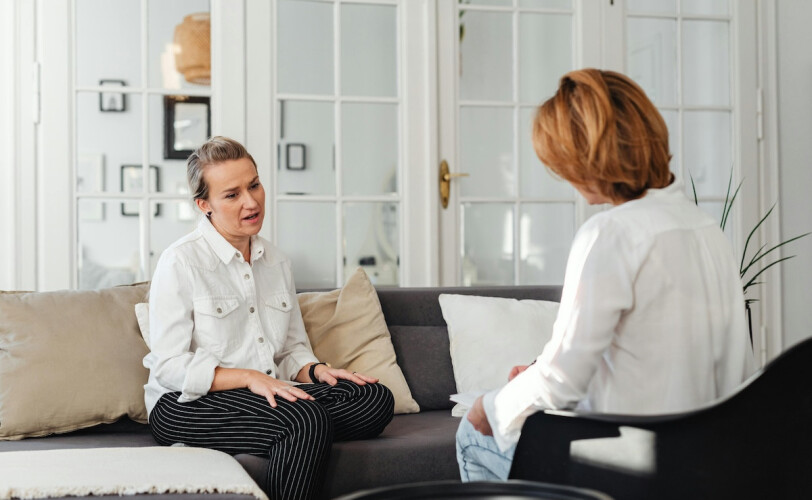
From birth, not knowing what was wrong with my baby, to multiple surgeries and complications, the mental and emotional impact this has taken on me as a single mother has been immense. Unfortunately, not one healthcare professional has ever asked if I needed any emotional support in seven years.
This impact is why I am so passionate about counselling parents who have children with SEN and disabilities, as the mental and emotional load is often left unchecked; additionally, the parent(s) are so focused on their child's well-being that they often don't consider their own health (mental and physical) a priority. To make matters worse, there are common barriers for a parent with a SEN/disabled child that may prevent the parent from seeking support. From my personal experience, I have identified two main barriers.
Barrier one: Fear of judgement
I was at university when I first started therapy. I did not really understand what therapy was. Instead, I carried a stereotypical image in my head of what a therapist looked like to me. At that time, a therapist was someone who would be analysing and making assumptions about me. Honestly, my experience of therapy wasn't positive initially due to my own fears of misunderstanding.
I always had my guard up; I could never talk freely. Instead, I was too busy in my head, worried about what she was thinking and what she was writing down. The fear of judgment is especially prevalent for mothers, and in my case, I was a newly single mother to a child with multiple medical conditions, which heightened my fear of judgment. As a qualified counsellor with experience sitting in the client's chair, I understand the importance of clearly expressing to my clients their rights, including the right to note-taking, as I recognise how these perceived fears can influence a client's experience and progress within therapy.
I know what it can be like starting therapy for the first time. The therapeutic relationship is an important factor in enabling clients to make progress. So here I am breaking down the stereotypical perceptions of therapists. Before I am a therapist, I am a mother; I say this because it's true and because expressing this truth will help to break stereotypical views that others may have about therapists.
Many therapists decide to train because of their past struggles; they have usually had therapy themselves and found it helpful, and as such, they want to support others. This is the case for me. Judgement does not enter the therapy room; qualified counsellors have undergone a high level of training and are bound by ethical frameworks and regular supervision, which prioritises a nonjudgmental approach. This is crucial for fostering a trusting therapeutic relationship and promoting client progress.
My advice
- Unfortunately, counsellors and psychotherapists are not legally protected titles, so please be mindful of this and seek out qualified support. You can be confident that professionals are qualified if they are members of a professional body such as the BACP, UKCP, or NCPS.
- Make use of free consultations/discovery calls that many counsellors offer, trust your gut and feel free to ask questions.
Barrier two: Financial cost and childcare
Many parents with children who have SEN and or disabilities face financial difficulties. There are additional costs related to raising a disabled child, such as aids, therapy, frequent hospital visits, giving up work to become a full-time carer, and even childcare options, which can sometimes be more expensive or even limited.
To help with this financial barrier, I am currently offering free counselling sessions to anyone eighteen years or above with Goldenhar and parents with a Goldenhar child.
My son has multiple medical conditions, so I do hope that this article will resonate with parents who have children with a range of medical conditions. However, this article does focus on the emotional impact of having a child born with a facial difference. Every condition is different, and even the same condition varies from child to child, although the emotional and social struggles that parents face often overlap.
The emotional layers that are often invisible to others
Our love hurts
We all wish for a healthy baby, but not every parent receives this gift. And yes, health is a gift, but, as I just wrote this sentence, I hesitated. I was about to delete it because, on the surface, it sounds bad until I realised that this is the exact point I'm trying to make. All children are a gift, but not all children are born with the gift of health.
As parents, we, of course, love our children no matter what. But when I looked at my newborn baby who was screaming with a dislocated hip and a tumour on his eye and would struggle to breathe while drinking his milk, I felt heartbroken that my son wasn't born with the gift of health. This new motherly love I felt wasn't like how it's typically described; instead, it was incredibly painful. From the very first day, worry, fear, uncertainty and heartbreak overshadowed the newborn phase – Would he be in pain forever? Would he be bullied? Could this be my fault? Does he need surgery? What's wrong with him? My love hurt.
Grief and loss
Many mothers imagine what it would be like to become a parent, picturing cosy newborn cuddles on the sofa, but when the unexpected happens, it can be a real loss to the parent. Acknowledging this can be difficult, but this is an important part of moving forward; in therapy, the therapist gives a parent the space to feel and grieve the loss that they once imagined.
Isolation
When I came home with my son, I wanted to be left alone, I needed to be left alone. Despite my feelings, it was natural for family and friends to be excited and want to visit the new arrival. I understood this, but I needed space to process and time to be by myself; however, this did not happen. Of course, no one knew how I was feeling (there is no blame here). My point is that, despite being surrounded by people, I still felt isolated. I felt alone with my thoughts and feelings, and the fact that I felt like I needed to pretend I was happy exacerbated it. Even though I was carrying love for my son, I was also carrying worry, fear, sadness and uncertainty; holding it all together for others felt like the worst kind of isolation.
Burnout
Having a child can be extremely demanding; having a child born with a condition like Goldenhar can put immense pressure on a parent(s). It is not just bringing the baby home; it is the appointments, the tests, the worry, and coming to terms with your child's health. This takes a massive amount of emotional and mental toll on a new parent(s).
Feeling a part of the trauma
When my son had his surgeries, the hospital staff struggled to put him to sleep because he was fighting against it. They asked me if it was okay to put him to sleep in his pushchair and then wheel him into surgery; this seemed like a better idea, but his pushchair was his safe place; would it be cruel to take this away from him? I didn't know the right answer, and I still don't know. We do the best we can as parents, and that will always be good enough.
Some moments in life stick with us; they seem to linger in the background no matter how hard we try to push them down; for me, this is the memory of me holding my son down while hospital staff put him to sleep. My son, looking directly into my eyes, crying, "no mummy", will always stay with me.
Our children do not understand why we, as parents as their safe persons, are doing things like this, and this is mentally and emotionally devastating. Parents' therapy can help us to process these painful memories and emotions.
What can help?
Counselling/therapy
Counselling (therapy) allows parents to express their thoughts and feelings without judgment. As discussed, having a child with disabilities can bring emotions such as guilt; a mum may think that she should not feel this way, which is why a nonjudgmental space is vital.
Therapy can help you navigate this difficult process (and yes, it's OK to acknowledge that it's challenging). In therapy, we can:
- feel safe enough to express how we really feel
- process thoughts and feelings
- strengthen the ego and emotional resilience
- grieve the feeling of any loss
- explore the new identity of becoming a parent to a disabled child
- work on our own attachment
I will go into more detail towards the end of the article about how counselling can specifically support parents who have children with visible differences, such as Goldenhar syndrome.
Peer support
Connecting with other parents and caregivers who understand the challenges associated can be extremely helpful. Social media can be a great tool for joining support groups; you can ask for advice, attend meetups, and even talk to someone who understands. Goldenhar UK hosts yearly family weekends, allowing Goldenhar families to come together, share their experiences, and support one another.
Fill your cup
We must take care of ourselves to take care of the ones we love (especially our children). Of course, everyone's circumstances are different, although raising a child with disabilities can be mentally, emotionally, and physically exhausting. You are not weak or a bad parent for seeking any support or needing a break.
More than a diagnosis
When your child is diagnosed with a medical condition, it can often be difficult not to focus solely on this. It's important to remember that your child's diagnosis impacts your child's care; it does not necessarily impact your child's happiness, personality, or potential in life. Rebecca Hitchen realised exactly how important this message is for parents. Rebecca created a guide that supports Goldenhar families both practically and emotionally from the start of diagnosis. The guide decreases confusion by providing clear medical information and increases hope by sharing real stories from people with Goldenhar syndrome.
What doesn't help:
Toxic positivity
Sometimes, family and friends who are well-meaning just don't know what to say, and this can manifest in toxic positivity; for example, others often said to me, "There are babies born with much worse", and yes, of course, this is true. Still, at that particular time, I could only think and worry about my baby, and these kinds of comments only invalidated my experience and increased my feelings of guilt.
Mental overload
I spent the newborn stage researching every aspect of my son's health. I became a full-time researcher, and I connected with parents from all over the world, learning about the type of surgery their child had undergone and who performed it. I wanted to know all the options for my son, and I wanted to know the reality of surgery. But honestly, looking back, I wish I could have spent more time out of my head and with my son without fear and worry, even just for a short time.
If this sounds like you, it may be a good idea to set regular breaks to "shut off" from the role of a researcher.
Performing resilience
It will look "bad", won't it, if you break down in tears? It will look bad if you express your fears, worries, uncertainties, and even anger. Please hear me when I say this: it won't, not to a therapist.
There's no medal for keeping everything bottled up, and over time, you're more likely to "break" by doing so. It's like filling a bottle over and over until, eventually, it overflows and must come out. It's always better to release our intense and bottled-up feelings in a safe, nonjudgmental environment, like therapy, so that the therapist can hold, explore, and help you to safely process your thoughts and feelings.
Disclaimer: Sometimes, we may minimise our own grief or experiences as a parent; this is often a coping mechanism that has developed. In psychodynamic counselling, we refer to this as a defence mechanism, and it's just the way that we cope. Sometimes, it's not always safe enough to explore; for example, maybe your child has upcoming surgeries, so you still need your coping mechanisms to feel safe through this challenging time. Your therapist will work at a pace that is safe for you.
Our story: Goldenhar syndrome
Goldenhar syndrome was first described by Dr. Maurice Goldenhar, a Belgian-born American ophthalmologist, in the early 1950s. Dr. Goldenhar observed a consistent pattern of congenital anomalies involving the eyes, ears, and spine in several patients, which led to the identification and characterisation of the condition now known as Goldenhar syndrome or ocular-auricula-vertebral spectrum (OAVS). His observations and detailed documentation laid the foundation for understanding this complex condition. (Goldenhar UK)
In 2022, I wrote a story for Changing Faces about being a parent to a child with a facial difference (due to Goldenhar syndrome) and the emotional impact that this had on me as a parent; you can find my full story here:
You don't "owe" anyone an explanation
A few years ago, I received training designed to help parents of children with visible differences navigate comments in public. I'm sure that this training was helpful to many, but at that particular time, it wasn't beneficial for me. The training focused on how to respond to others who ask questions in a public setting. But I thought (and still do) that it missed a vital step. The training assumed that the parent or carer was happy to share their child's medical information with a stranger who asked. I know at that time, I was not in the right space emotionally to be discussing my son's diagnosis with strangers, and this should be a choice, not an obligation.
In my story, I expressed, "My hope is that my son's story reaches out to people who don't have a visible difference so that they choose empathy and compassion before their own curiosity."
Many people ask without considering the parents' or the child's feelings. I feel that this is often the case with anything that lacks emotional resonance or is unfamiliar to us.
I remember feeling angry that others would often stop us, and my first thought was, "Will this always happen? How will my son feel about this when he gets older?" My thinking process then was, "A stranger wouldn't walk up to someone in a wheelchair and say why can't you walk? So why should this be any different to someone with a facial difference?"
Some parents do not mind and see this as a perfect opportunity to educate others and raise awareness. However, not everyone shares this sentiment, and parents' feelings regarding this may vary and even change depending on their stage of the journey. For example, a parent may not even know their child's diagnosis as sometimes this can take years; a parent may be waiting for surgery, so may be anxious, or a parent may worry about the impact it has on their child overhearing strangers making comments and asking questions.
The training should have first acknowledged how parents feel about sharing this information and then supported them in making their own choices. This would be my approach if a similar situation were to arise in my therapy space. A parent's feelings and experiences should be validated and explored.
A free resource for parents
I have created a guide for parents of children with visible differences titled "Sharing Photos Online: A Gentle Guide for Goldenhar Families."
How psychodynamic counselling supports parents of children with Goldenhar and other conditions involving visual differences
Psychodynamic counselling helps parents process unconscious emotional responses, such as grief and guilt, and build on their emotional resilience. This work is especially important for parents who have a child born with a visible difference, such as Goldenhar syndrome.
It's important to recognise that this really is a journey, with its ups and downs and many emotions along the way. The depth of therapy you may need at a particular time in your journey may vary depending on where you are and your circumstances; for example, maybe at the start of diagnosis, you may only be ready to talk openly and process some of your experience and emotions. This work is vital, but it's also vital that therapy is at your own pace. There may also be additional factors that come into play, such as your own childhood and experiences; there may be things that you're just not ready to explore yet, and that is OK. You can always come back to therapy at a later date. Therapy really is different for everyone.
1. Processing grief and loss
Parents may experience grief; having a child born with a facial difference is often not known until birth, so a parent is emotionally unprepared. In therapy, we explore unconscious feelings, bringing them into awareness and working through acceptance.
2. Negative emotions
- Guilt: Many parents often feel guilt; for example, was this my fault? I held onto guilt for a long time; did I do anything wrong in my pregnancy? It's essential to explore how we truly feel; we shouldn't suppress this guilt; we need to examine it so that we can enhance our conscious awareness and work through it both cognitively and emotionally.
- Fear: It's not typical to feel fear as soon as you see your newborn, but I did, and many parents in a similar situation to me do. If you are a parent to a child with a visible difference, it's typical to worry about your children's future, about bullying, and future surgeries. We can intensify fear due to unconscious processes tied to our own past experiences. Therefore, therapy can also be helpful by exploring the deep roots of these fears through uncovering early experiences, strengthening the ego, focusing on emotional regulation, and developing self-compassion.
3. Projection and identification
Because fear is often heightened in the situation of having a child born with a visible difference, a parent may project their own fears due to their own wounds onto their child. So, for example, if a parent was bullied as a child, they may assume that this will be the case for their child and project their own past experiences.
The parent could also absorb their child's feelings as their own or as a way to protect the child from psychological pain or rejection. The parent may become overly involved, and as a result, the child may struggle to distinguish their own feelings from those of others.
Therapy increases awareness of projection and identification, allowing the parent to separate their emotions from their child's.
4. Social judgement
Parents may struggle with social pressure; this could be feeling judged or pitied (this is a common one for parents with SEN/disabled children), and feeling that they are not in control of how others perceive them and their situation. In therapy, we explore and process these feelings, helping parents build up their egos so they are better equipped to deal with social pressure.
5. Acceptance and ego strength
Therapy strengthens the parent's ego, which supports their ability to tolerate distress, manage emotional conflict, process emotional memories, and build on acceptance of their child's condition.
6. When coping mechanisms clash
When a child is born with a medical condition that affects their physical appearance, parents often cope in different ways. One parent may become overly protective or emotionally overwhelmed, whereas the other parent may withdraw and shut down emotionally.
This can lead to issues between the parents, causing emotional distance, misunderstanding and even feeling emotionally abandoned due to the contradictory coping mechanisms.
This kind of dynamic between the parents can put pressure on the family unit. This may negatively impact the child if they can sense tension between parents. Additionally, it's likely to hurt each parent's sense of isolation in their coping strategies. It may even trigger old childhood wounds of rejection or abandonment that can influence their attachment style.
7. A sole parent
I define a "sole parent" as a parent who raises a child alone without any involvement of the other parent. This scopes beyond a single parent. In cases where the child has any disability, the sole parent can feel an immense amount of pressure in terms of making medical decisions alone. Counselling can help the sole parent to talk through their feelings and make sense of their choices. It can also assist the sole parent with emotional regulation, enabling them to make decisions more effectively without intense feelings impacting their decision-making ability.

Find the right counsellor or therapist for you
All therapists are verified professionals