Life without script: 21st century anxiety and search for meaning

A feeling of being misplaced, a sense of confusion, of not knowing who we are and where to direct our lives. Anxiety, even dread, may often come from this inner uncertainty. A sense of being lost. Some have called us ‘the anxious generation’. We scroll, search, and self-diagnose. We look outward for answers, we keep busy, but underneath it all, there’s a feeling that we’ve been left to figure life out on our own, without a blueprint, and not many hints either.
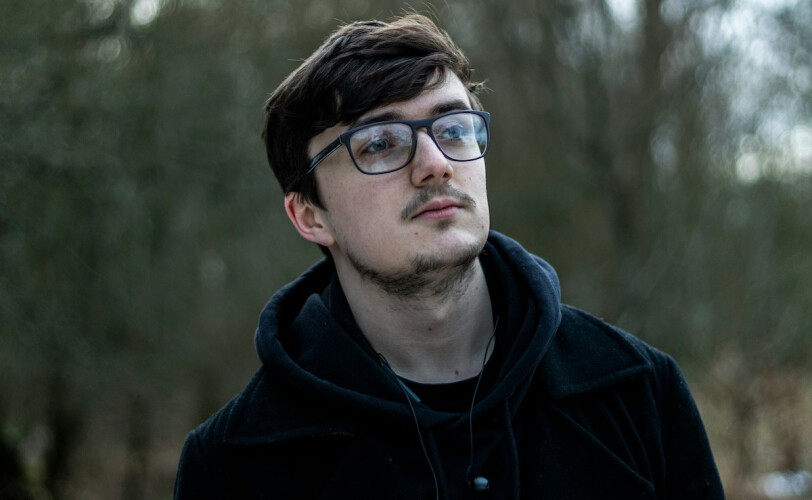
The collapse of the life narratives
Part of this anxiety comes from the collapse of the big ideas that once gave people direction. For centuries, religion provided a ready-made script: rules to follow, values to uphold, and a story that explained your place in the world. In the West, Christianity once shaped not only our moral compass, but our calendars, our families, and even our sense of self.
That’s no longer the case. For many of us, religion no longer speaks to our lives or offers the structure it once did. It's not just Christianity; many belief systems that previously gave people a sense of belonging, purpose, and continuity have lost their grip.
In their place, politics stepped in, socialism, activism, and community organising. These were, in many ways, secular religions, offering hope, solidarity, and meaning. But over time, these too have faded. Political ideals are now fragmented and diluted. Political parties no longer represent a distinct view of the human being and their society to work and strive for, but rather just a version of the same individualistic model. Social bonds are looser. Activism exists, but often online, fleeting, and quite disconnected from the lived community.
And so... what are we left with?
The modern Western world prizes freedom, individuality, and self-expression. These can be beautiful ideals. But they come with a cost: the loss of shared meaning. There is no longer a single, accepted story about who we are, why we’re here, or what makes a good life.
We are more free, but we are also unmoored.
The existential void
Philosophers saw this coming long ago. Friedrich Nietzsche, more than a century ago, wrote that “God is dead.” With this expression, he pointed to the collapse of shared, religious values in modern society. In other words, he alluded to the decline of a higher ordering principle in people’s lives. With God gone, humanity was left facing a blank page, a world without meaning imposed from above.
Sartre, Camus, and other existentialists picked up this thread in the 20th century. They wrote of the deep anxiety that emerges when there is no script to follow, no ultimate meaning to rely on, and yet we are still painfully conscious beings, searching, suffering, asking.
To live in the modern world is to experience this tension. We are flooded with choices, with potential freedom, with information, and yet, we feel lost. Human beings are meaning-making creatures. We need something to hold onto. We want to know who we are, what our life is for, and what we should do.
Without a script, life becomes overwhelming.
And when that overwhelm meets the complex realities of work, relationships, social media, climate change, economic instability, it’s no wonder anxiety, depression, and burnout are everywhere.
The bright side of it all
So far, this might sound bleak. But there’s another way to look at it.
What if this loss of a script is not only a crisis, but also an opportunity?
For the first time in history, in many parts of the world, we are free to create a life that reflects who we truly are. We’re not forced into pre-made roles. We’re not handed a script and told to read our lines.
True, like never before, we are exposed to the invasive influence of marketing via social media, constant advertising, and pushed psychologically towards a kind of non-stop activity. We are expected to always be doing: working, performing, achieving, consuming. But the keyword here is psychological. This means we are not coerced physically; there’s no policeman with a rifle dictating our lifestyle, as there was in the Soviet Union. The pressure is internal, not external. And that matters, because it means we can work on our minds. We can learn to see through it and this way, find more freedom.
Instead of being forced into a role, we now have the possibility, at least in theory, to become the authors. The barriers are now more internal psychological obstacles, so the responsibility lies with us.
This freedom is terrifying, but it gives us the opportunity to shape a life that feels more authentic. To explore. To choose. To create.
Therapy as a modern sanctuary
This is where therapy enters the picture, not just as a form of treatment, but as a space for self-discovery.
James Hillman, a post-Jungian psychologist and philosopher, described therapy as a “healing fiction.” A place where we can write and rewrite the script of our lives. Not to escape reality, but to make sense of it and to find our place in it, our character in the story.
Therapy is not about returning to some past ideal. It’s about creating something meaningful in the present, using the fragments of what came before, and the raw material of your own lived experience.
It’s a place where you’re allowed to ask big questions about your life. Where you can play with ideas from psychology, philosophy, religion, spirituality and the material from everyday life and choose what resonates with you to create your own meaning, your personal narrative.
And perhaps for the first time in human history, we have access to an unprecedented library of wisdom. We can draw on ancient traditions, Eastern and Western, spiritual and secular. We can take what works and leave what doesn’t. We can create something personal, grounded, and real.
In this way, therapy becomes a kind of sacred space, not religious, but deeply human. A place where the self can be explored, constructed, and reimagined.
Writing your own script
The work of therapy is, in many ways, the work of authorship. You don’t have to invent everything from scratch, but you do get to choose. You get to draw from your personal history, cultural elements and beliefs, learn from your own pain, and craft something meaningful and personal.
It’s harder than following a pre-made script; it takes time, effort, and requires you to be honest with yourself and vulnerable. At the same time, it is an act of creativity and in some ways an act of courage.
We may have been left without a script, but this represents at the same time an unprecedented challenge and opportunity. Like all crises, the crisis of meaning we are experiencing can be destructive, but it also presents a great opportunity to be resolved with a leap ahead; the ability to write your own script and live a unique and really meaningful life.

Find the right counsellor or therapist for you
All therapists are verified professionals