Choosing a therapy format: Indoor vs outdoor vs online

As a counsellor who offers the varied options of indoor, outdoor and online therapy, I’m often asked which format is best. The truth is, each setting offers its own benefits, and the most suitable approach depends on your individual needs, lifestyle, and preferences.
In this article, I'll share my views on each format and offer some suggestions about which may be most suitable for your therapeutic journey.
Why the therapy setting matters
During my counselling training, I completed placements in both indoor and outdoor environments. I was the first student from the University of Edinburgh to practice outdoor therapy – a form that has since become increasingly popular, particularly after the COVID-19 pandemic. The mental health benefits of being outdoors have become even more apparent, and there has been a growing move towards combining mental health support with being in nature.
It feels important to say that, for me, each of these therapy options has many more similarities than they have differences. I approach my work with the aim of offering acceptance, empathy and understanding, and with a focus on building a genuine and supportive connection with the client. These conditions remain the same and are fundamental to my approach, even if the environmental setting might be different.
In-person indoor counselling
In-person indoor therapy is seen as the more typical, conventional practice method. For many clients, the four walls of a counselling room bring a feeling of safety and containment and sitting across from a counsellor allows for connection to form in the space between, where they can build a trust to share what is important to them.
There is a consistency to the surroundings that can help bring a sense of calm, allowing a client to work through what may be challenging thoughts and feelings that are important to their therapeutic journey and path towards change.
Outdoor therapy
Some clients may have a different view of the counselling room, feeling constrained sitting in one place and awkward or anxious about the focused attention (including extended eye contact). For these clients, being outdoors can take away that constrained feeling, helping them open up more easily.
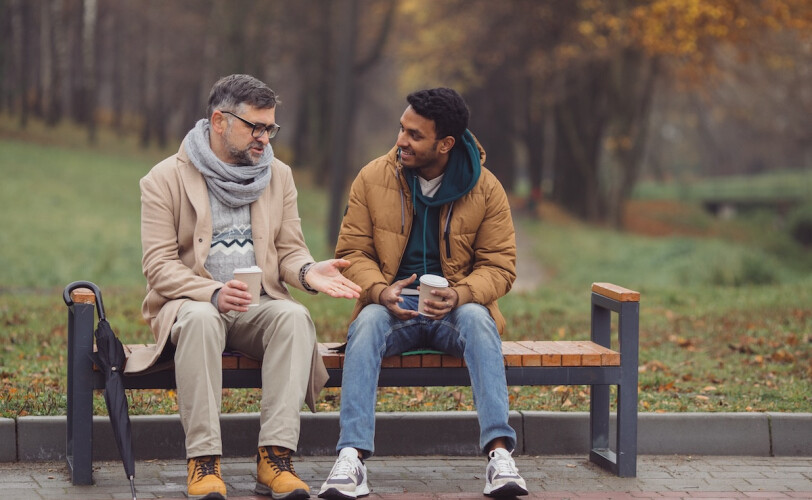
Walking side-by-side with someone can feel more 'natural' and calming, and being outside in nature has been shown to support overall well-being. This method is also suitable for all fitness levels, as walking can be interspersed with a period of sitting on a bench.
Recent articles in the media have confirmed how the NHS is beginning to train healthcare professionals to work outdoors in nature to help treat people's mental health conditions, including anxiety and depression.
In my experience, outdoor therapy can be of benefit to clients with ADHD or who might be on the autism spectrum. It can also be helpful for those who feel they can get caught up in their own head, as the physical act of walking and movement naturally brings some of that focus into the body. Clients who place a lot of value in a holistic, healthy body/healthy mind connection and who feel energised by being in nature may also feel drawn to working outdoors. Clients I have worked with outdoors can bring a variety of issues to the work, examples have included self-worth, acceptance, masculinity and vulnerability questioning, gender identity, anxiety, depression and PTSD.
That said, there will also be therapeutic work that is maybe less suited to being undertaken outdoors. Clients bringing highly emotive topics such as childhood trauma or bereavement might benefit more from the ‘safe space’ of the counselling room, and the suitability of working outdoors is something I always consider before beginning the work. The space we choose to undertake outdoor counselling in will also be carefully considered. What I look for in an outdoor therapy space is a quiet area, within a contained green space, that provides an ideal opportunity for reflection.
Online counselling
Issues including accessibility may mean that neither in-person indoor nor outdoor options are really a good fit for certain people, and that is where the option of online counselling is so important.
Whether it is through juggling a busy work/life balance, mobility issues that make leaving the house a challenge, or other factors, the convenience of modern technology and the use of video calling has opened up the option of counselling to many who may not have previously thought it possible for them. As a counsellor, online work has also expanded my world, opening up the rest of the UK as a potential client base for me to work with.
There is no single “right” format – it depends entirely on what you need from your therapeutic space. By offering in-person, indoor, outdoor and online therapy options to clients and listening to and discussing the needs and aims of their therapeutic journey, my aim is to provide the option of counselling to as many people as possible. I hope that by working together, we can find the most suitable and productive fit for you.

Find the right counsellor or therapist for you
All therapists are verified professionals