Shopping addiction and management

Unlike other compulsive behaviours, compulsions to shop or spend are often talked about as if they are frivolous. It’s possible, ironically, to buy clothing with slogans like “Shopaholic” or “Eat, Sleep, Add to Cart, Repeat.”
If you’re struggling with urges to spend, it can be hard not to laugh along – even if, deep down, you feel uncomfortable or ashamed. Friends might tease, a partner might question your latest purchase, or the postman might comment on your growing pile of parcels.
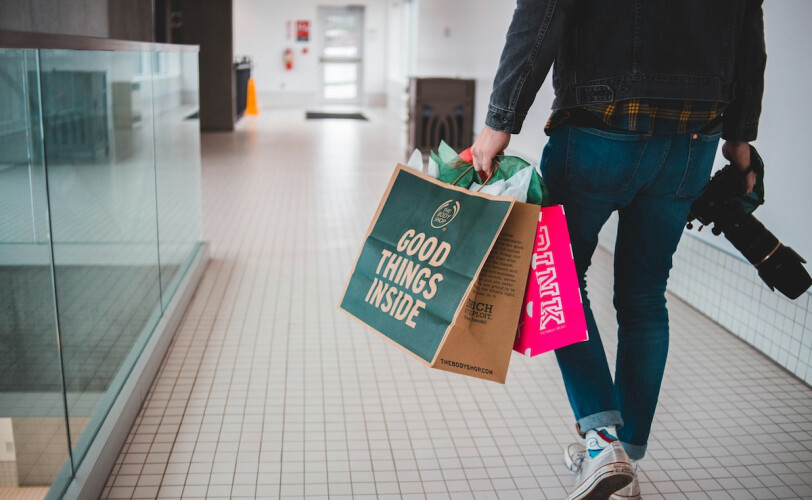
These seemingly harmless remarks can make it even harder to express how much distress the behaviour is causing, how out of control it feels, or how much shame it stirs. You may find yourself thinking, “If this were a real addiction, people might be more sympathetic.”
Understanding shopping addiction
Oniomania, from the Greek “onios” (for sale) and “mania” (madness), translates to “insanity for sale.” While this term captures the intensity of the experience, it’s not entirely fair – feeling caught in a compulsive moment doesn’t mean you’re “mad.”
It can, however, involve compulsive or addictive behaviours that can be deeply distressing and lead to serious real-world consequences, including judgment from others, strained relationships, persistent shame, financial hardship, and even overcrowded living spaces.
Why it’s more than “just shopping”
I tend to think of shopping addiction as two separate but related compulsions: in the first place, the pull or drive to spend money, and in the second, the desire to acquire something new. They might sound the same, but they have different emphases, unique meanings to individuals experiencing those feelings, and other root causes.
Recognising the cycle
There tend to be four stages to an episode.
The four emotional stages
1. First, you see something you “must have”
The sense of need becomes increasingly demanding. You might feel that your mind has been taken over by the idea of the item, that it will be transformative. You might struggle to sleep because you’re thinking about the item, and you could experience physical sensations of longing, such as butterflies in your stomach. This moment, much like the early stages of falling in love, can be all-consuming.
2. Internal negotiation
You might promise yourself that if you buy this thing, it will be the last impulse purchase because it will complete you. It will make complete sense in that moment, and you will mean it when you promise that it’s the last time. It is often this broken promise to yourself (or others) that makes the shame when the cycle starts again so profound; a sense of having failed or of being a failure.
This preparatory stage, where money needs to be found and research done, is still primarily happening in your internal world. It can feel very exciting. You may feel you’ve been hijacked by the sensations.
3. Next, the action moves into the real world
You go shopping (in real life or online) and spend money. You believe the item is yours. In reality, you are now the guardian of another item that needs to be taken care of.
4. Reward
You get a dopamine high, the single thing that will change your life is now yours. Life might truly feel like it can get started; you are going to be changed, and things can be different. All the anxious anticipatory feelings have dissipated; maybe some wounded part of you feels it has been soothed.
These feelings do not last long. You end up back at the starting point, carrying lots of negative feelings of regret, shame, embarrassment, anxiety about your financial situation, and concern about the impact it may have on your relationships.
What causes shopping addiction?
Shopping addiction can have deep roots in early experiences that play out in these compulsive behaviours, whether that’s the spending part of the process or the acquisitive part. Spending can be about many things, from safety seeking to uncertainty. It can be a refuge, an expulsion, or an "acting out" of the way in which you were educated about money when you were younger.
Why you spend will be unique to you and needs to be understood in the context of your own particular set of circumstances and experiences. It might be about seeking safety and security, self-soothing, or wanting to communicate with others. The causes can be nuanced and complex, but that does not mean they are unknowable or that you cannot be helped. They just aren’t known yet.
Another element is to understand the fantasy you are trying to fulfil:
- Do you browse online shops after a stressful day at work?
- Do emails from retailers with tailored offers make you feel seen?
- Who is it that you believe a new item will help you become?
- What do you imagine it will enable you to do?
- What do you anticipate people will think if you do or don't have the item?
Cultural and societal influences
Culturally speaking, there is a pervasive narrative that there is one thing that will make us whole: we’ll meet “the one”, get a “bag for life”, one great pair of “do everything” shoes, the “perfect” coat/pair of jeans/holiday, etc. We are sold permanence in a world defined by the absence of it. Acquiring things might feel like an anchor, but while they may feel safe, they can also weigh us down.
Society has become increasingly fleeting; we often have only seconds, or 150 characters, or a snapshot, to communicate something of ourselves. The semiotics of what we have or wear takes on inflated levels of significance in a landscape dominated by social media, and can change in a heartbeat. That can feel pretty lonely at times.
I’m not suggesting the answer is for us all to live off-grid, and nor should we: social media can have a powerful and positive impact on all our lives. As with all things, we need to be mindful of how we consume it. We cannot underestimate the influence that the social media landscape has on the way we all consume and spend our money. There is an inherent tension between what we know about over-consumption and how we are also being encouraged to do so with both tangible and intangible things.
Steps to take if you're struggling
If you recognise any of these experiences or feelings, there are things you can do.
Practical actions to regain control
First, notice what it is that causes the feeling. Throwaway moments in the here-and-now can have deep resonances with impactful moments from our past. Make a note of what is going through your mind. Don’t curate it, write down whatever pops into your head.
We all need to spend time with real people, make real connections, and have real experiences. That doesn’t mean grand or expensive – eat lunch in the park one day and see if that makes you feel better in the afternoon.
Remember, these behaviours are not who you are. These are things you are doing and can therefore stop doing. You might just need some support to stop doing them.
When the feeling is upon you, if it is practical, speak with a friend or family member who is non-judgmental and also great company. That distraction might be enough to defuse the intensity of the feeling.
If you are concerned about your spending, it can be helpful to set up a spreadsheet and list everything you spend for a month to see what is really going on. No judgment, just knowledge, and knowledge is power.
Remember, these behaviours are not who you are. You might just need some support to stop doing them.
How therapy can help
Remember, these behaviours likely developed as a coping strategy. They were probably helpful at one point, but they have stopped being helpful now. You might consider trying CBT (cognitive behavioural therapy), which can help you identify your triggers for spending or buying. It can also be excellent for helping you develop healthier coping strategies.
When you have some new strategies in place, talking therapies, such as psychodynamic therapy, can help you understand why those compulsive behaviours developed in the first place. That can be difficult work, so look for a therapist who understands that spending and buying have had a serious impact on you and who will support you in understanding why.
There are also excellent resources available for practical support. If you are experiencing debt as a result of overspending, you need to work on the reasons for overspending, but you also need to take steps to help manage the debt so it doesn’t create more anxiety. Trying to avoid anxiety can be a trigger for overspending.
- Speak to the Citizens Advice Bureau or charities that provide free debt advice. Any organisation that tries to charge you for advice about managing your debt should be avoided.
- The book “Your Money or Your Life” by Vicki Robin and Joe Dominguez is an excellent resource for helping you begin to understand your relationship with money and implement practical steps for changing it.
Everyone tells stories about their "stuff" and who they think it makes them, even minimalists (an absence of stuff is still a relationship to stuff, after all). For some people, those stories take on a greater intensity and result in compulsive behaviours.
For those affected by shopping addiction, it’s important to acknowledge that your struggles are legitimate, not silly or embarrassing, or something to be laughed at. You are not silly, you are suffering.
Finding a therapist who can help you explore these feelings can help you see how much you have been bearing. Together, you can find ways to move forward to a healthier relationship with money, with things, and with yourself. You deserve that.

Find the right counsellor or therapist for you
All therapists are verified professionals